
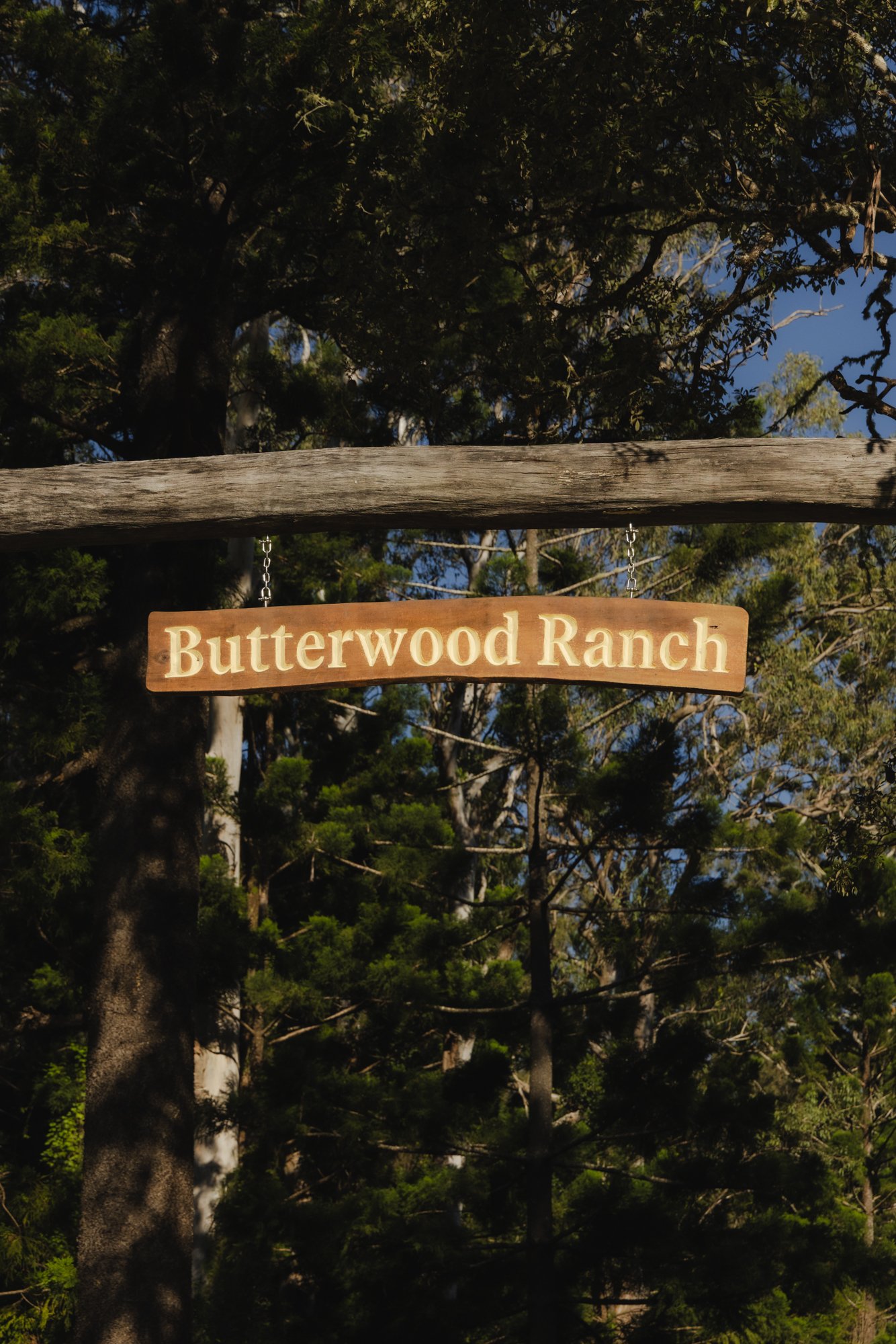
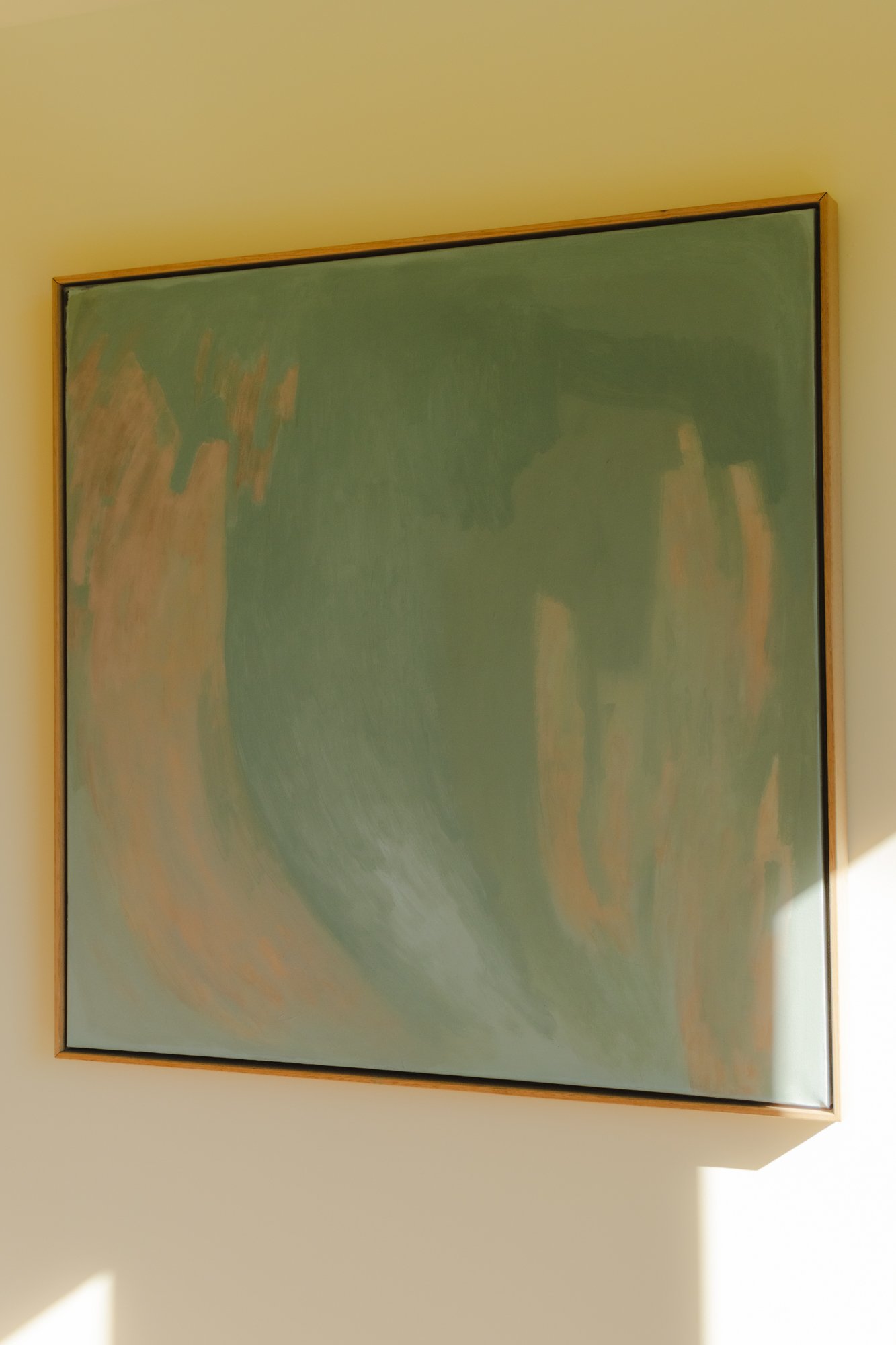
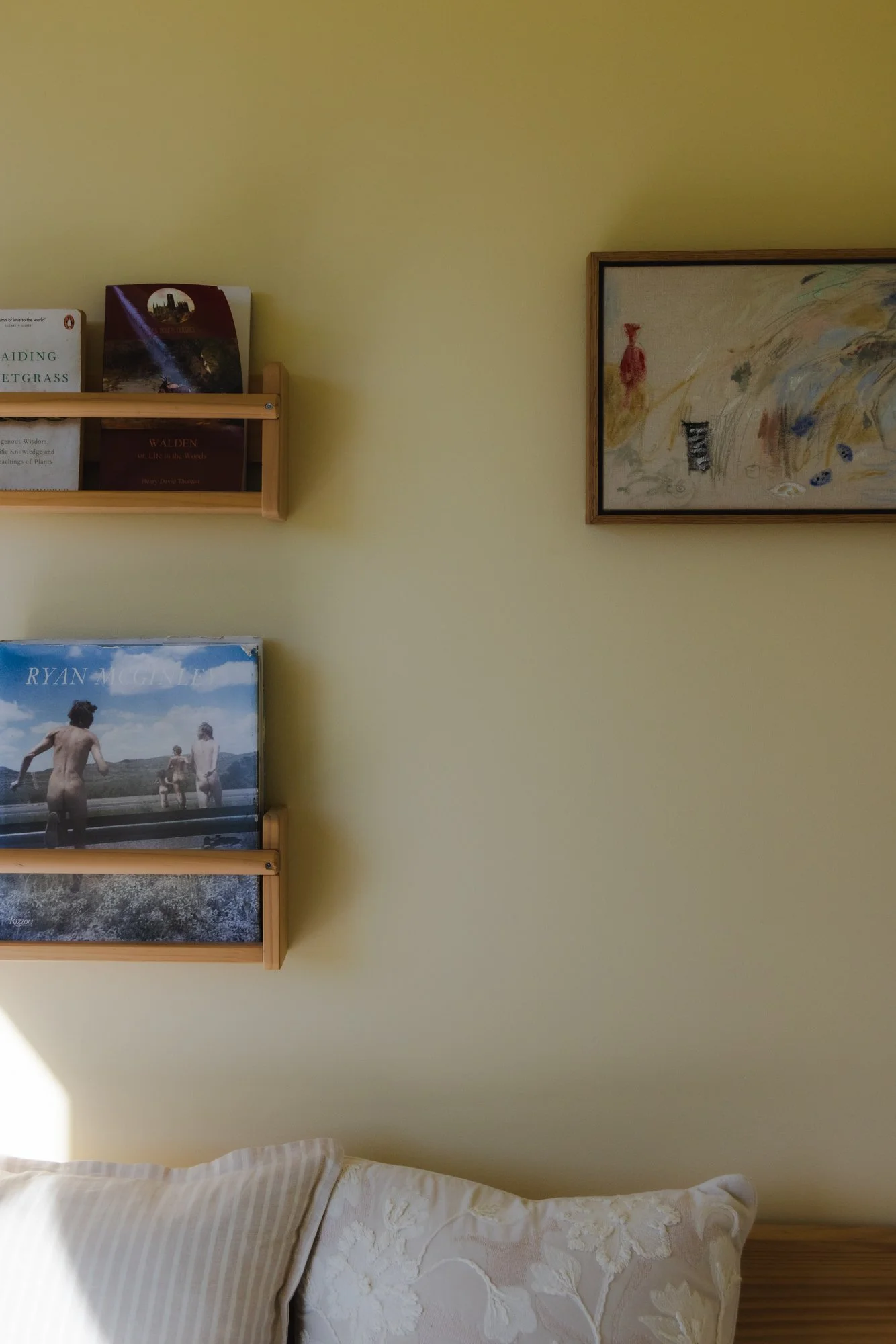
Situated on the hills of a hundred-acre farm on Bundjalung Country, NSW, lies Butterwood Ranch, a boutique guest house and artist residency that invites you to truly embrace the natural landscape. Whether you choose to stay simply for the peace and quiet of a rural setting or to delve into your own creative practice, every single detail has been expertly curated throughout. From the art on the walls to the literature on the shelves, it is a place to quiet the mind and allow the surroundings to treat your senses.
Butterwood Ranch was envisaged by Olivia Drake and materialised by her partner Geoffrey Uhrhane. Drawing from her time in the French countryside, Georgia O’Keeffe’s Ghost Ranch in New Mexico, and her background in fashion editorial, Drake has perfectly merged contemporary aesthetics with the charm of the Australian countryside.
“I loved how landscape, art, and culture converged in one place; how that combination curated a distinct sense of place – a feeling of immersion which left you in a constant state of awe.”
Fortunately, with a master craftsman as a partner, Olivia was able to bring her vision to life. She describes their partnership as yin and yang, with Geoffrey able to ground her ideas into the physical realm to deliver a truly bespoke and highly considered experience.
“I've come to understand the collaboration with the farm estate itself as an experimental artistic practice. We are constantly reading the land and interpreting it as if it were a material — then coming together to execute the form, whether that is building the cabin, curating an exhibition, or harvesting honey, making raw milk soap, beeswax candles, or pasture-raised eggs.”
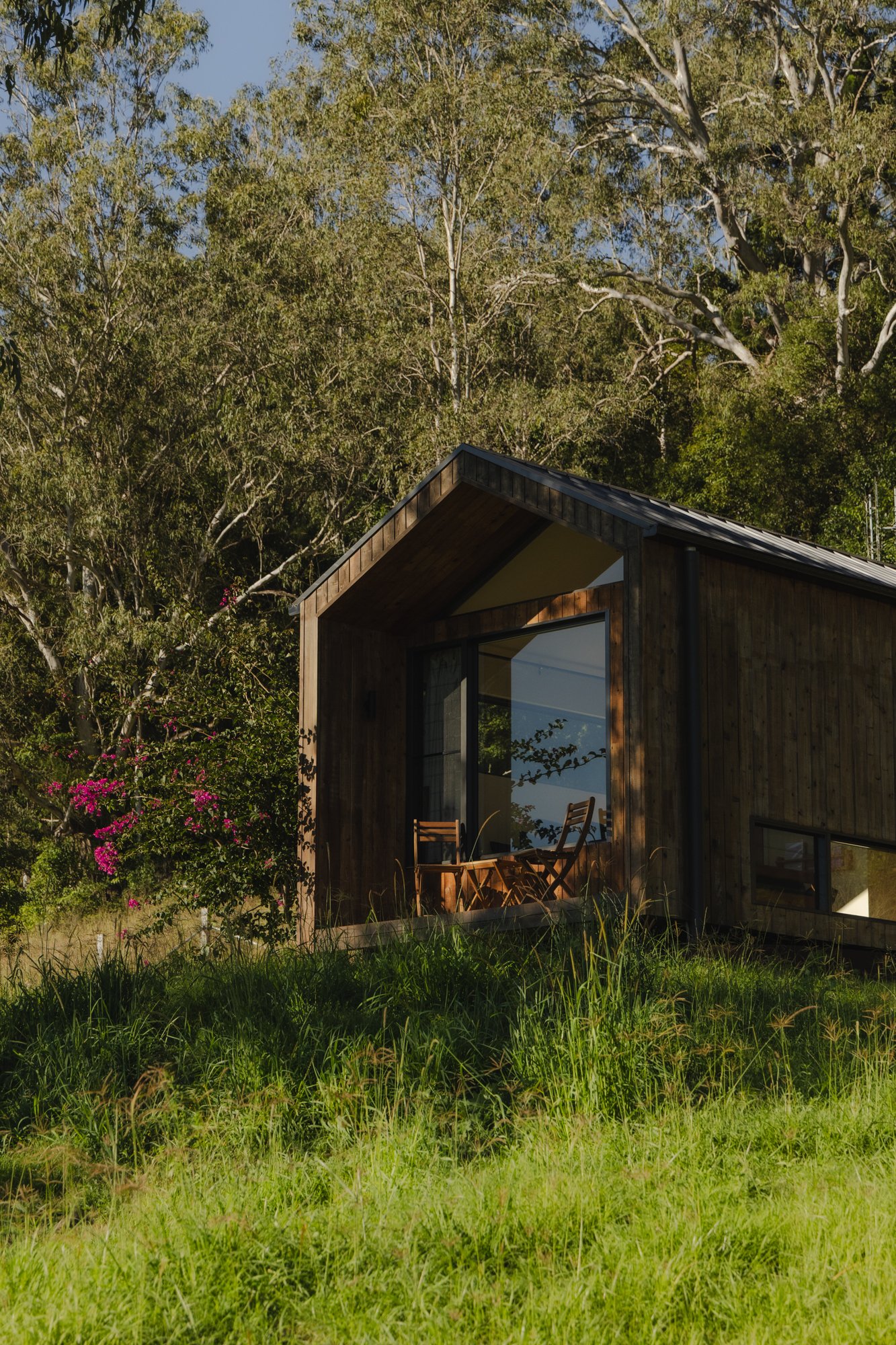
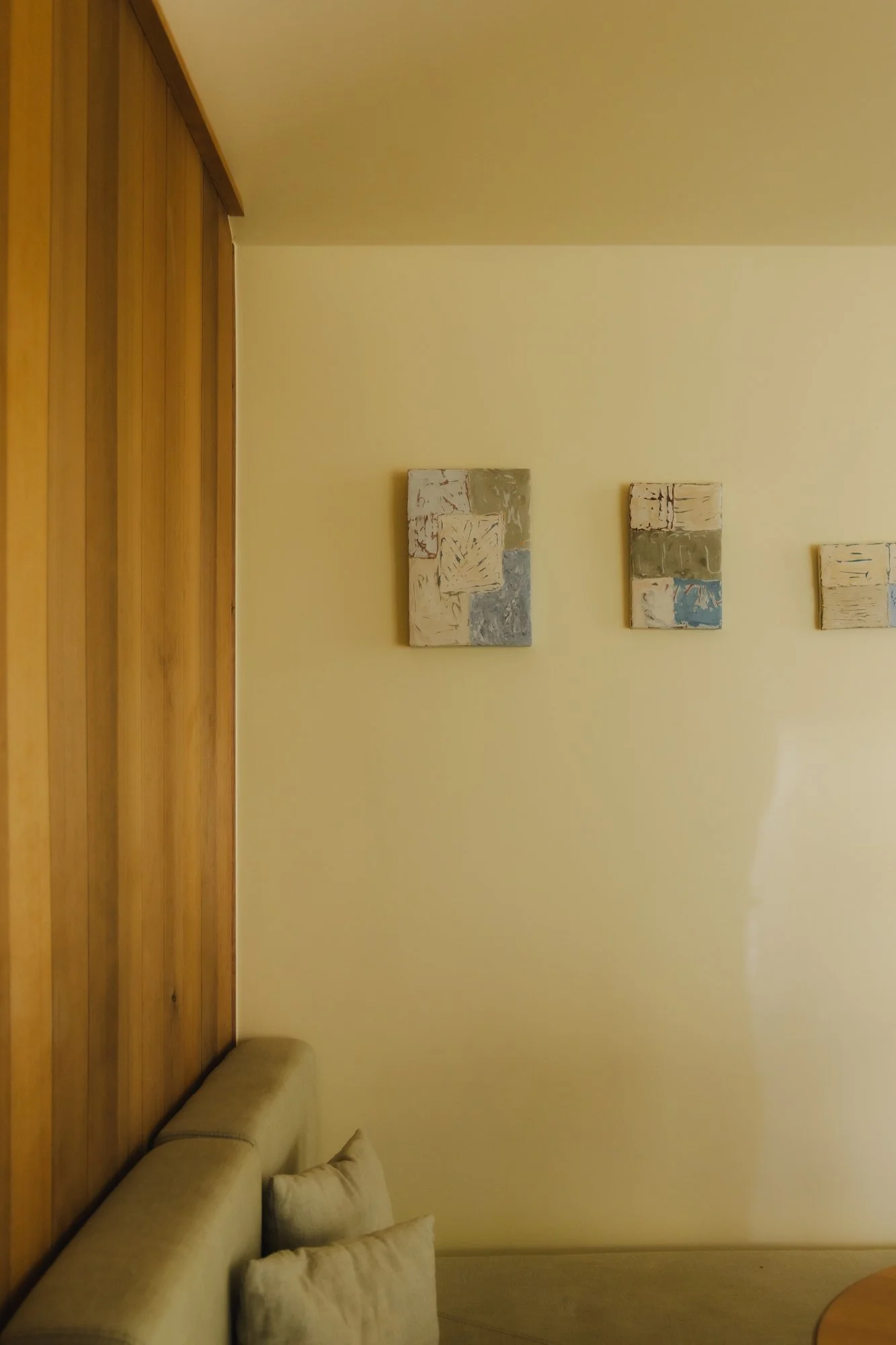
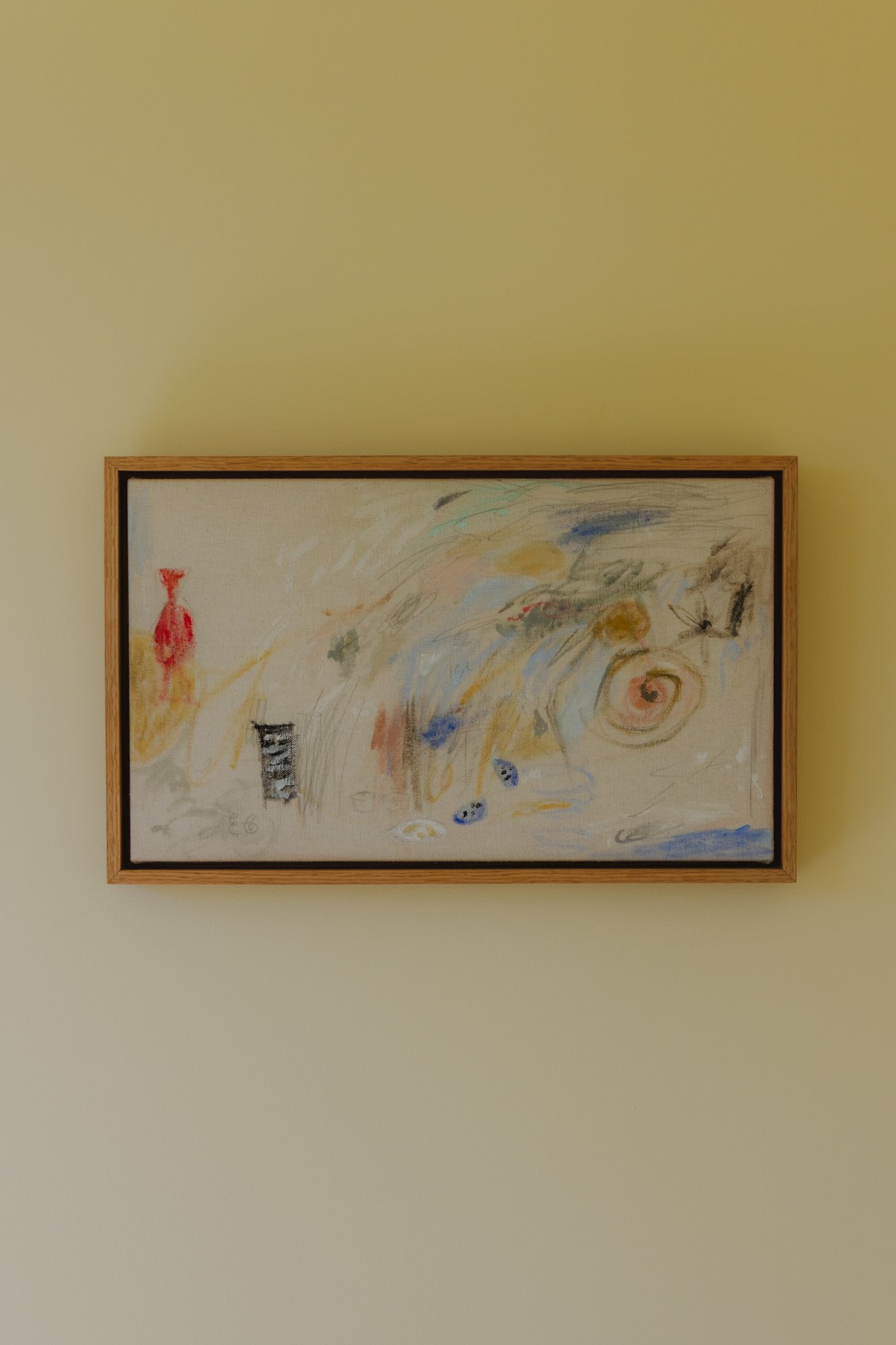
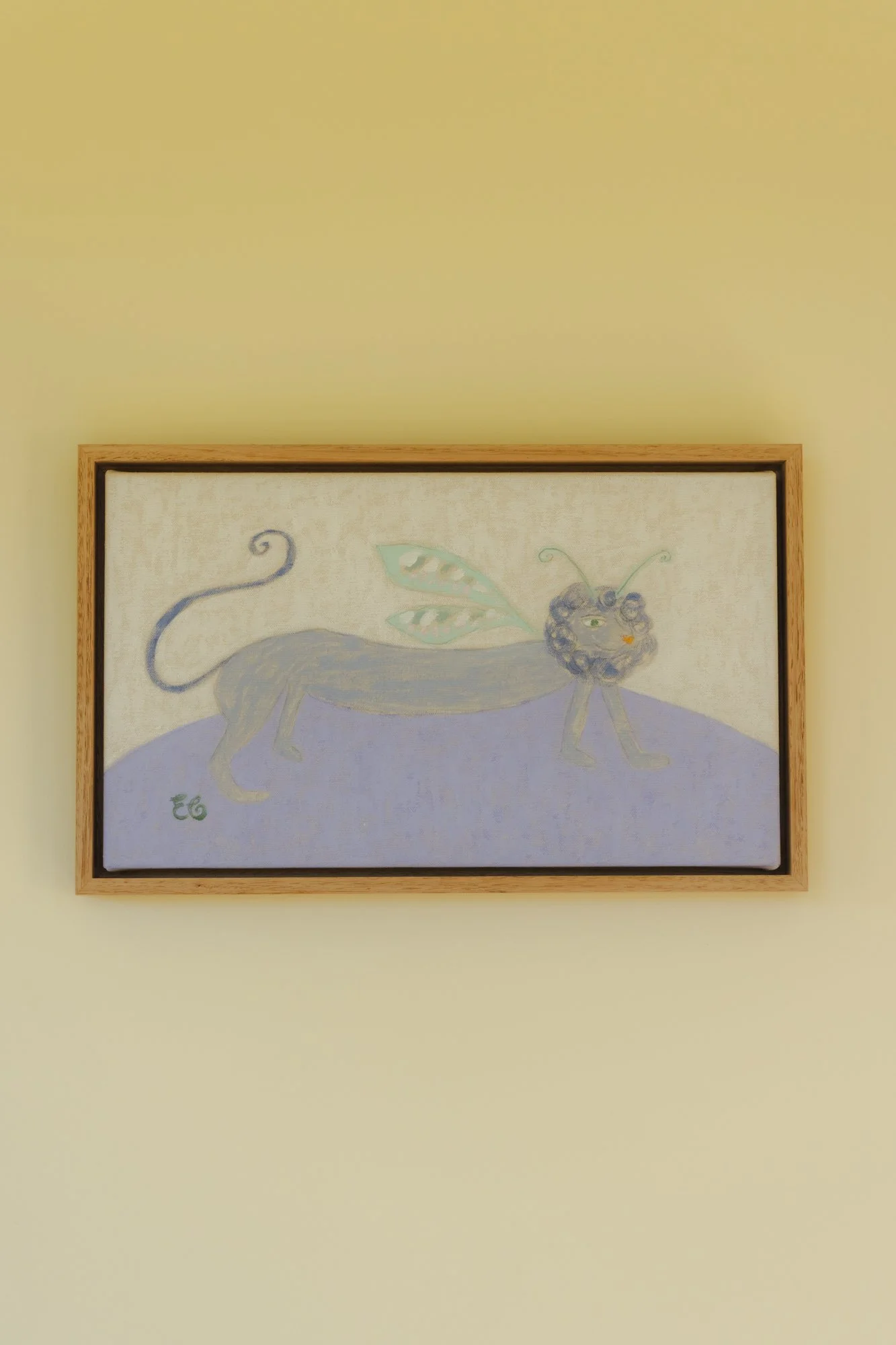
Part gallery, part guest house, Butterwood recently hosted its inaugural exhibition, En Plein Air. The exhibition showcases seven regional artists within the cabin, curated with intention and in relationship to the surrounding landscape. An ideal setting for an artist residency or to simply evoke an appreciation for the beauty of another’s craft.
A journalist herself, this interview with Drake is a pleasure to read. Her eloquent portrayal of the journey of Butterwood Ranch will no doubt leave you inspired to take a much-needed pause.
MM. What is Butterwood Ranch (for those that have not yet discovered you)?
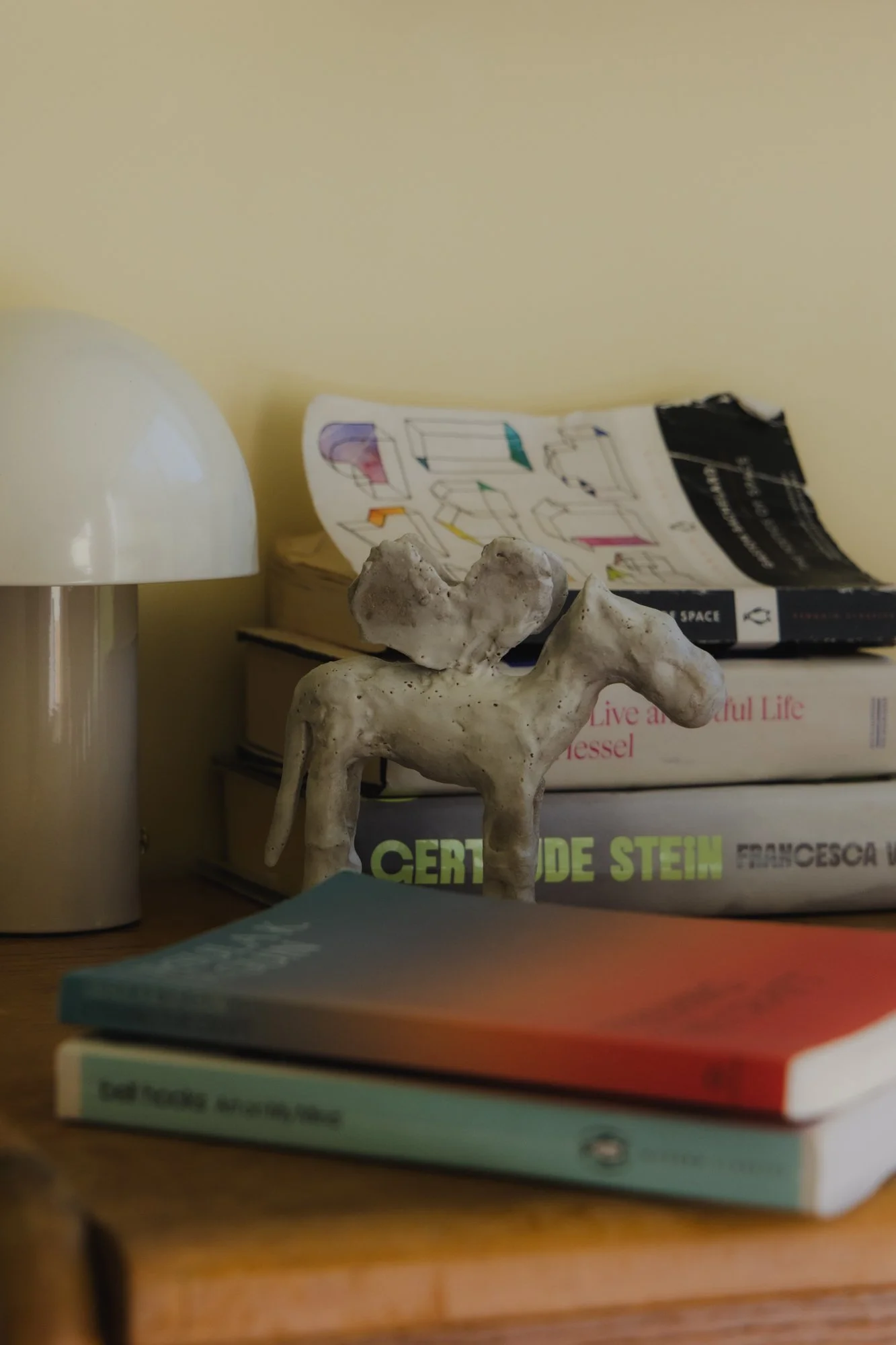
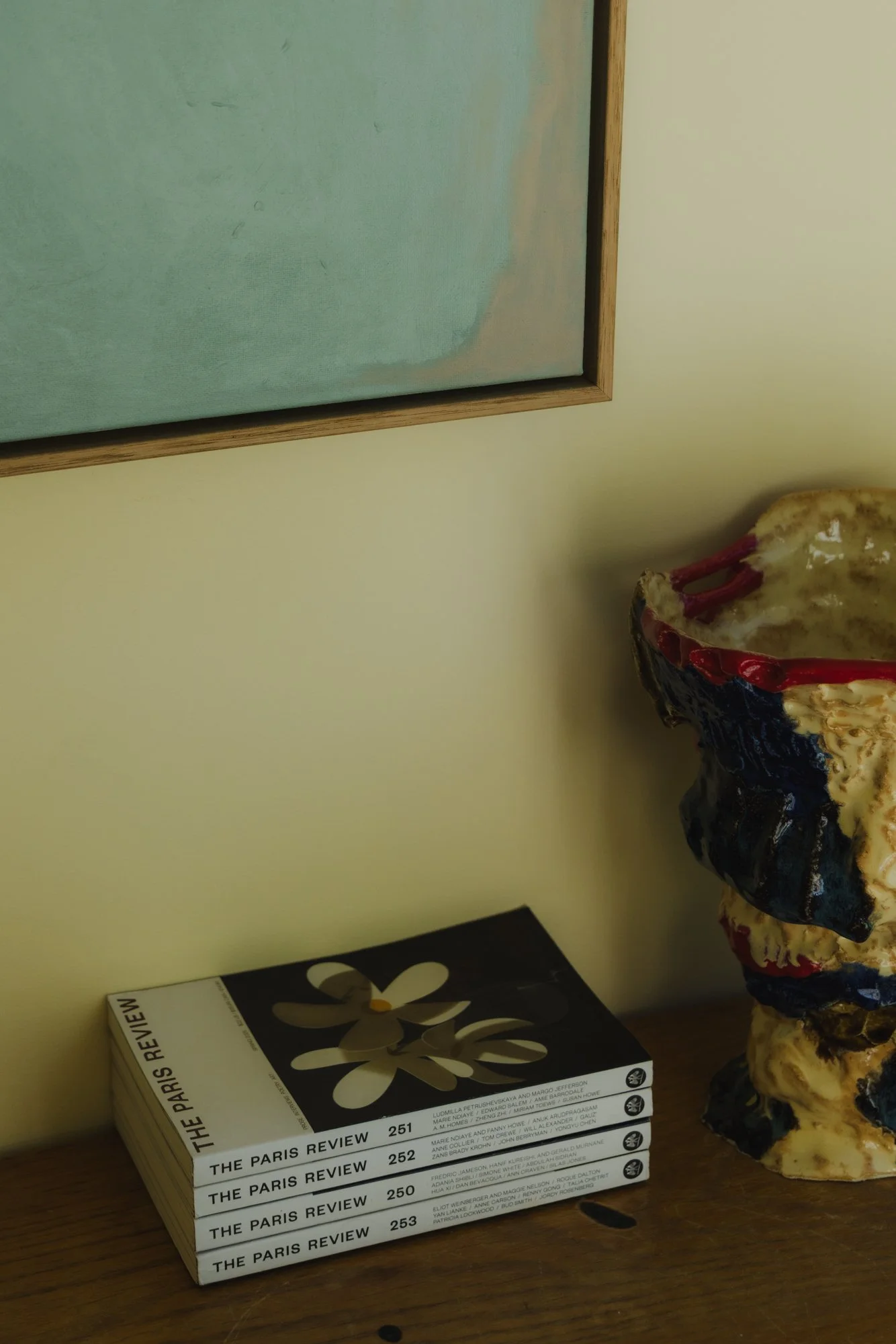
B. Butterwood Ranch is a former dairy set on a hundred-acre farm estate. Part gallery, part getaway – we are a boutique guesthouse and artist residency in the Northern Rivers, Bundjalung. Inspired by the French philosopher Gaston Bachelard’s theory that the house should shelter dreaming, the cabin exhibits contemporary art, design and literature in dialogue with the pastoral landscape. The interiors are intimately curated to invite poetry, reverie and repose back into your world.
MM. How and when was the vision for Butterwood Ranch conceived?
B. This year marks five years of Butterwood Ranch, though the vision was conceived long before that. Inspired from a period of my life when, after a career in fashion journalism, I experienced burn out and left the city for the French countryside. I lived simply in the mountains, in a wooden roulotte with no electricity, writing poetry by hand and working in a garden. That year devoted entirely to my artistic practice revitalised who I am as a person and as a writer. My travels to Georgia O'Keeffe's Ghost Ranch in New Mexico fed into the concept too — hence the word ranch. I loved how landscape, art, and culture converged in one place; how that combination curated a distinct sense of place – a feeling of immersion which left you in a constant state of awe.
Those experiences were over a decade ago now and I am still enriched by it everyday. It is a testament to what quiet, creativity, and nature can do when held in a conscious container and how travel can be a transformative experience from mere tourism to something deeper, more like an intimate voyage.
After becoming parents and again living in the city, Geoffrey and I noticed how necessary it was to go out into the countryside to reconnect and reset as a family — and yet, with my background in editorial, I was consistently underwhelmed by the aesthetics of country stays. I don't subscribe to traditional rustic codes. The idea sprang from there: to create something contemporary in the Australian countryside that showcased modern, local savoir-faire and felt highly curated. Regional hospitality has come so far in the last decade since then. It’s really an inspiring category to be a part of now as I feel as if Australia is really pushing the envelope within the luxury travel sector.
MM. We love when creatives merge their practices to create something meaningful. How have the two of you collaborated on the physical and conceptual aspects to bring it all together?
B. We work in a yin and yang way. There is a rich duality between our practices that allows the vision to come to life. Where I move more freely in the ephemeral, Geoffrey is deeply grounded in the material. He is the master craftsman behind the ranch — bringing the hand of the artisan to every surface, every threshold. Every rock wall, every nook, all the cedar cladding, even our own house. He has built most of it himself, or with a small team of trades. It’s really quite incredible to observe how he brings things into tangible form.
My scope covers creative direction — branding, copy, curation, interiors, marketing. I’m very much working in the ideation and design stages. All the dreaming really. I've come to understand the collaboration with the farm estate itself as an experimental artistic practice. We are constantly reading the land and interpreting it as if it were a material — then coming together to execute the form, whether that is building the cabin, curating an exhibition, or harvesting honey, making raw milk soap, beeswax candles, or pasture-raised eggs.
The concept is always evolving with us, never stagnant. I tend toward compartmentalisation in brand strategy; I like clean structures, neat frameworks. But this project has taught me to let it be experimental, a little avant-garde even. That freedom has become something nourishing to my craft, a palette cleanser to the more structured work I do outside the ranch. I feel it to be a dialogue not just between Geoffrey and I, but between place, domesticity, and the concept of home. Butterwood Ranch, the brand is, in the deepest sense, a cultural extension of our family life.
MM. What is your favourite aspect of the property?
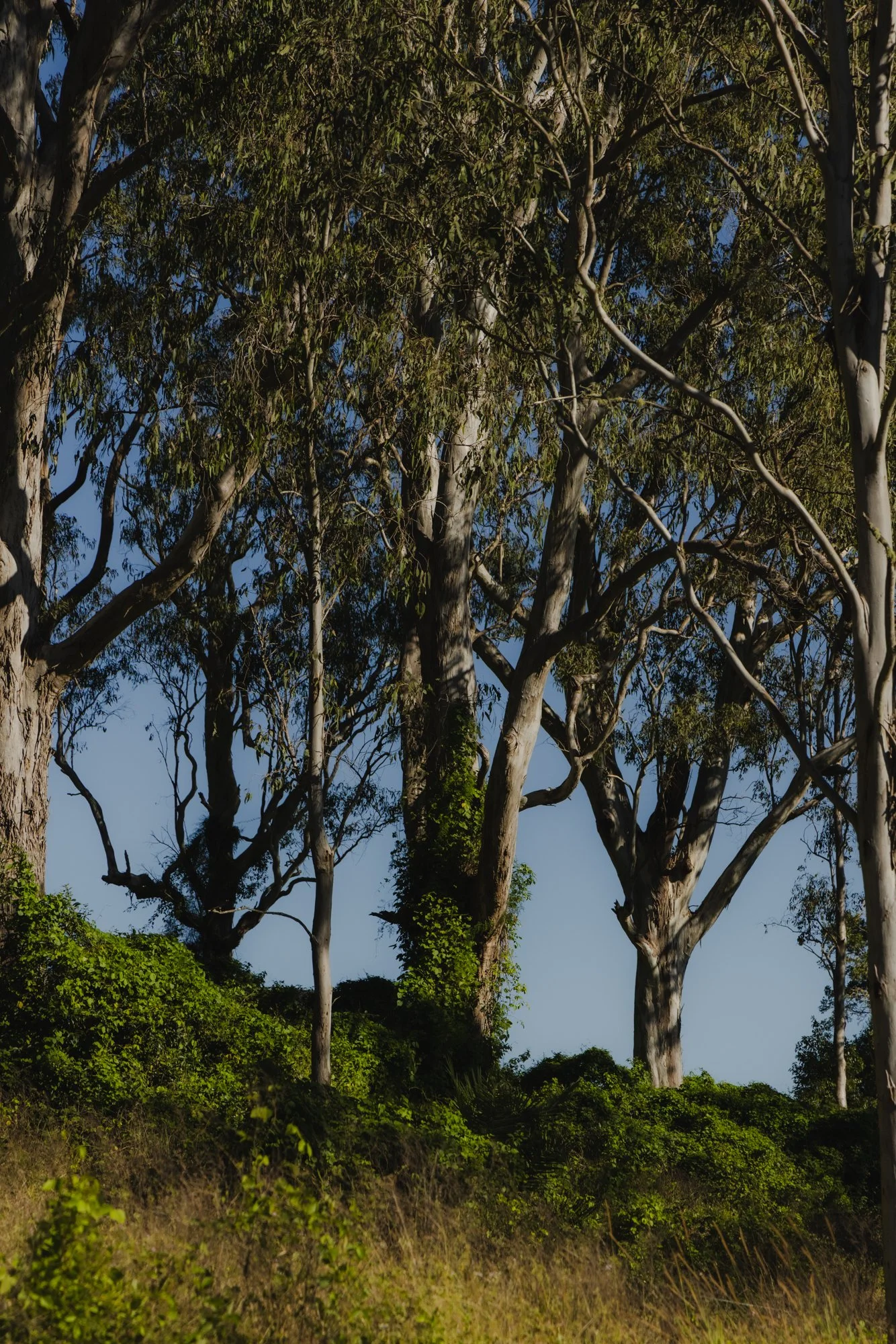
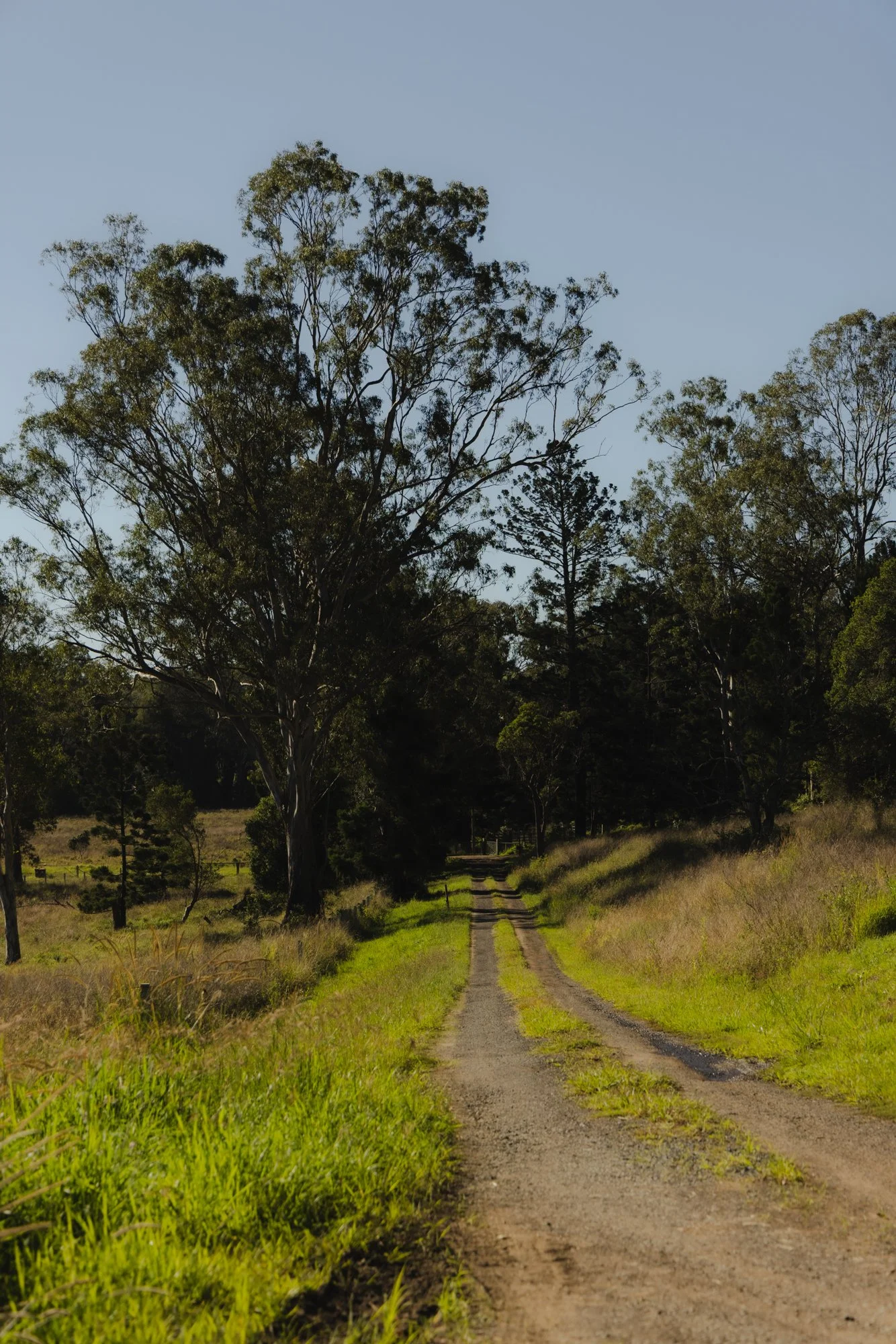
B. There is a meandering little path past the gate near the cabin where the Jersey herd likes to graze. Up that track, marked by butter yellow painted posts, it takes you up into the hills into a secret woodland and meadow where all you are surrounded by is green. It is like being inside a verdant womb, as though nothing else existed for miles except fields covered in lilac wildflowers.
It is a place I go for clarity, or calm. It is remarkable what even a few minutes on that track can do for the nervous system, or for creative block.
That said, watching all the colours of dusk in the sky over the paddocks is very much my favourite painting to look at every day. There is a perfect spot at the back of the cabin with wooden chairs to soak in this view.
MM. Each component of the accommodation is clearly curated with intention. What do you hope guests will come away with after their stay?
B. There is a Tibetan proverb that sums it up neatly: "The highest art is the art of living an ordinary life in an extraordinary manner." This is very much what I curate the cabin to inspire. I have always been of the opinion that beauty and art can be conjured from the simplest of things; it is in the focus, the care, and the poetry with which you conduct your daily rhythms that colours a life.
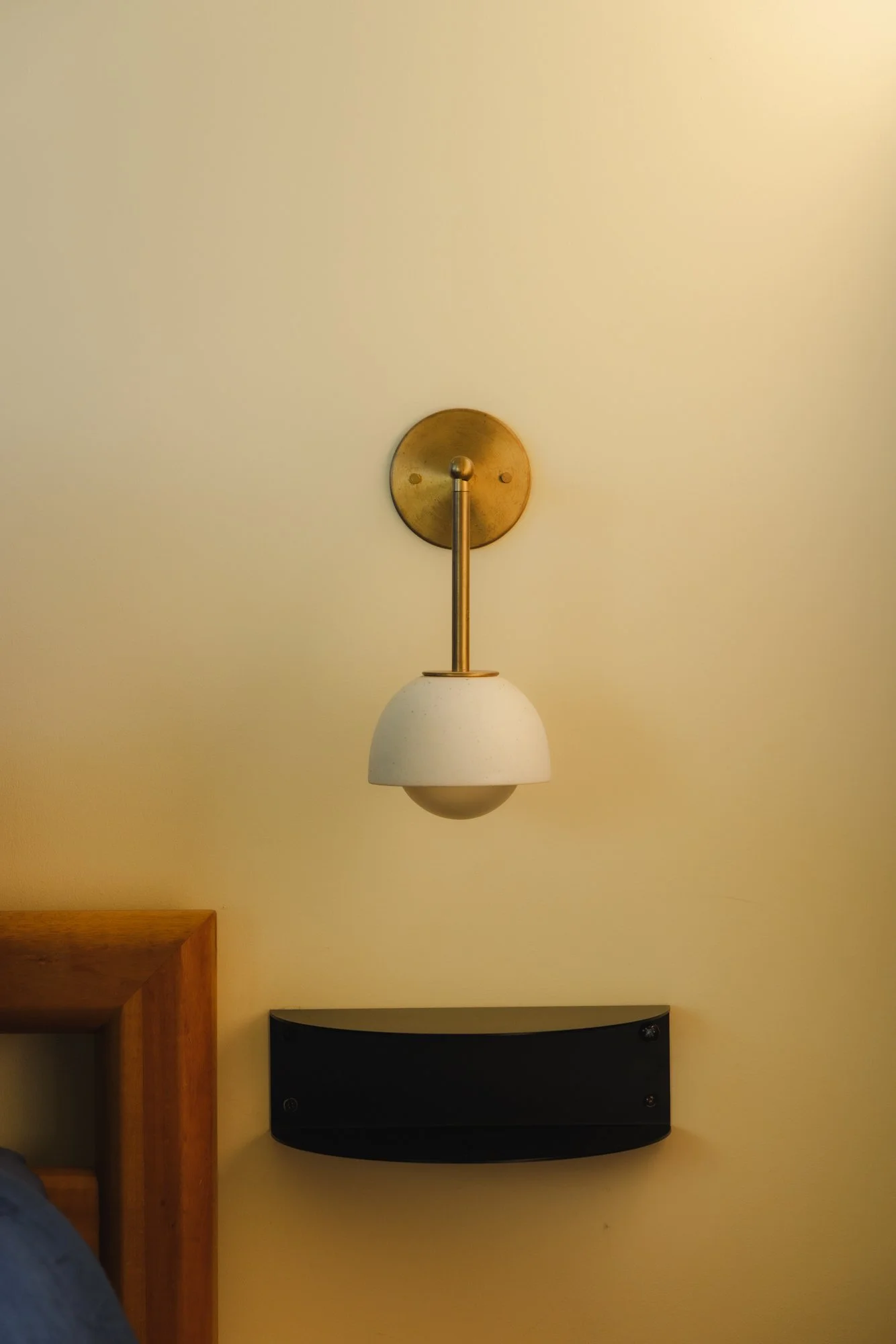
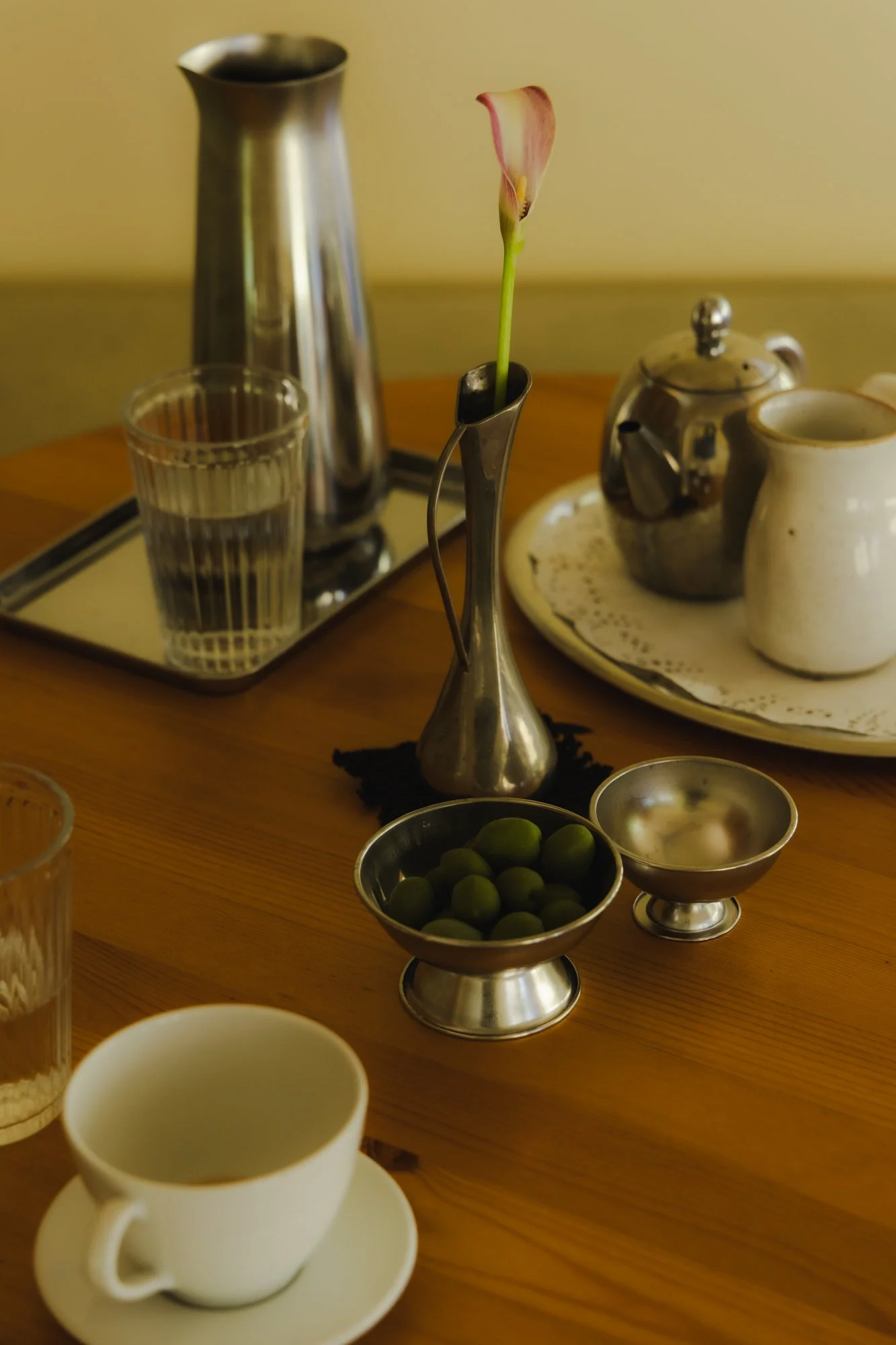
We live such fast, complex modern lives. The interiors were kept deliberately refined — a subdued ambience with just enough whimsical charm to pique curiosity. The feedback we receive from guests is, very often, exactly what I hoped the space would invite. A reacquaintance with themselves, with their partner, with forgotten dreams perhaps. A memory of what it felt like to have an afternoon with no particular obligation. To have read something that moved them, encountered a work of art they didn't expect to find, sat with the landscape long enough to feel it stir something inside them. We hope they leave with their imagination rediscovered — the kind that makes ordinary life feel more delicious.
MM. Can you tell us a little more about the artist residency program?
B. The art critic bell hooks writes in her essay Women Artists: The Creative Process that solitary space is sometimes a place where dreams and visions enter — and sometimes a place where nothing happens at all. Yet it is, she observes, as necessary to active work as water is to growing things.
She speaks most specifically to women and the lack of space made available to us simply to be still. Although our programme is open to artists of all backgrounds, the residency places particular intention on creating space for female artists to explore repose and return to that dreamlike state of creative fertility.
The cabin is simple and petite by design to allow ease in daily domestic tasks, and to be welcoming to women who may also be caretakers of small children. We invite our artists to arrive with a blank mind. To be open to mystery. To converse with the landscape spontaneously and allow new ideas to gently seed throughout the stay. In a technological era where mystery and creative spontaneity are so rare, we hope the residency can offer this to the artist, and through their work, to our community at large.
MM. Why do you think it is so valuable for creatives to spend time away in designated spaces such as this?
B. In a world that prioritises control and certainty, the spontaneous, and mysterious have become genuinely countercultural. Baudelaire called it fertile laziness (la peresse féconde) – that quality of restful idleness from which the deepest creative work quietly forms.
It is my observation that in our modern age, creativity is necessary across many disciplines — not only what we traditionally call the creative industries. Einstein described it as intelligence having fun. The act of creation feels like a medicine for our times, and yet I have also witnessed how quickly it becomes a source of depletion when not practised with care. Automation, homogenisation, overproduction — all of it is taxing on the spirit, and devoid of imagination.
When we step outside our automated routines, we invite the imagination to explore and expand. We become more open to the wonder already present. More curious about the world. Nature and art both have a remarkable way of activating that sense of intrigue — when we encounter something that moves us, whether a wildflower or a prose poem, our stress softens, our mind clears, our perspective widens. We don't always require a forest or a star-filled sky to feel wonder, but sometimes placing ourselves in a new environment — particularly one as beautiful and ever-changing as nature — we are simply more inclined to explore, to be curious, to play, to be fully present. There is a marvellous book that explores the science of all this, The Power of Wonder by Monica Parker. Highly recommended.
MM. Olivia, as a writer, what have you personally experienced working from the property?
B. Before moving to the farm, my craft was already deeply entwined with dreaming and the imaginal fields. I felt more at ease in the ethereal than the material. The farm has required me to ground into myself, into the people around me, into the place I inhabit. It has challenged me, and in a sense begrudgingly forced me to be here, physically, now.
I am a dreamer by nature and by profession — writing very much operates in the dream realm — and I could get stuck in the dream phases: strategising, visualising, researching, drafting, without the action to then translate the dream into physical reality. The farm does not permit this. It demands action constantly, and it is in that dance between dreaming and doing that I have found the most rewarding clarity and the most distilled sense of my own creative desires: writing a novel, postgraduate studies in literature, art curation.
As an introvert, the quiet and slower pace of life here suits my temperament well. In the past I moved through regular cycles of burnout. Here I keep a steadier pace, moving between different projects, keeping the practice balanced.
And then there is boredom — which I have come to regard as a great creative benefactor. I am a full-time mother of two young daughters. Domestic and farm life can teeter on the mundane given my former life in the eclectic world of fashion magazines and advertising. But it is precisely this, a kind of mind-bending, magnificent boredom that has pushed me toward my best ideas. At the time, following the creative seed feels more like self-preservation, an act of activating my own sense of awe. Later, as the concept develops, I am always so grateful the boredom sent me there.
MM. What is planned for the future of Butterwood Ranch?
B. We want to share this place with our community on a larger scale. A gallery and event space is in progress — which will allow for a broader exhibition programme that cross-pollinates regional, cosmopolitan, and international artists. An intimate literary salon series launches in the cabin later this year, for those craving a country sojourn without the overnight stay.
And we are carving out more workshop opportunities on the farm for people to enjoy simple pleasures — to feel at ease to daydream and rest, then easily return to their daily lives with their creativity quietly refuelled.I don't believe retreat needs to be extreme to be deeply effective. The magic, I find, lies in the small and the micro — the uncomplicated, the accessible, the ordinary rendered luminous.
For more information about upcoming events and exhibitions at Butterwood Ranch:
@butterwoodranch
www.butterwoodranch.com