
Edition 05. Pazzalotti
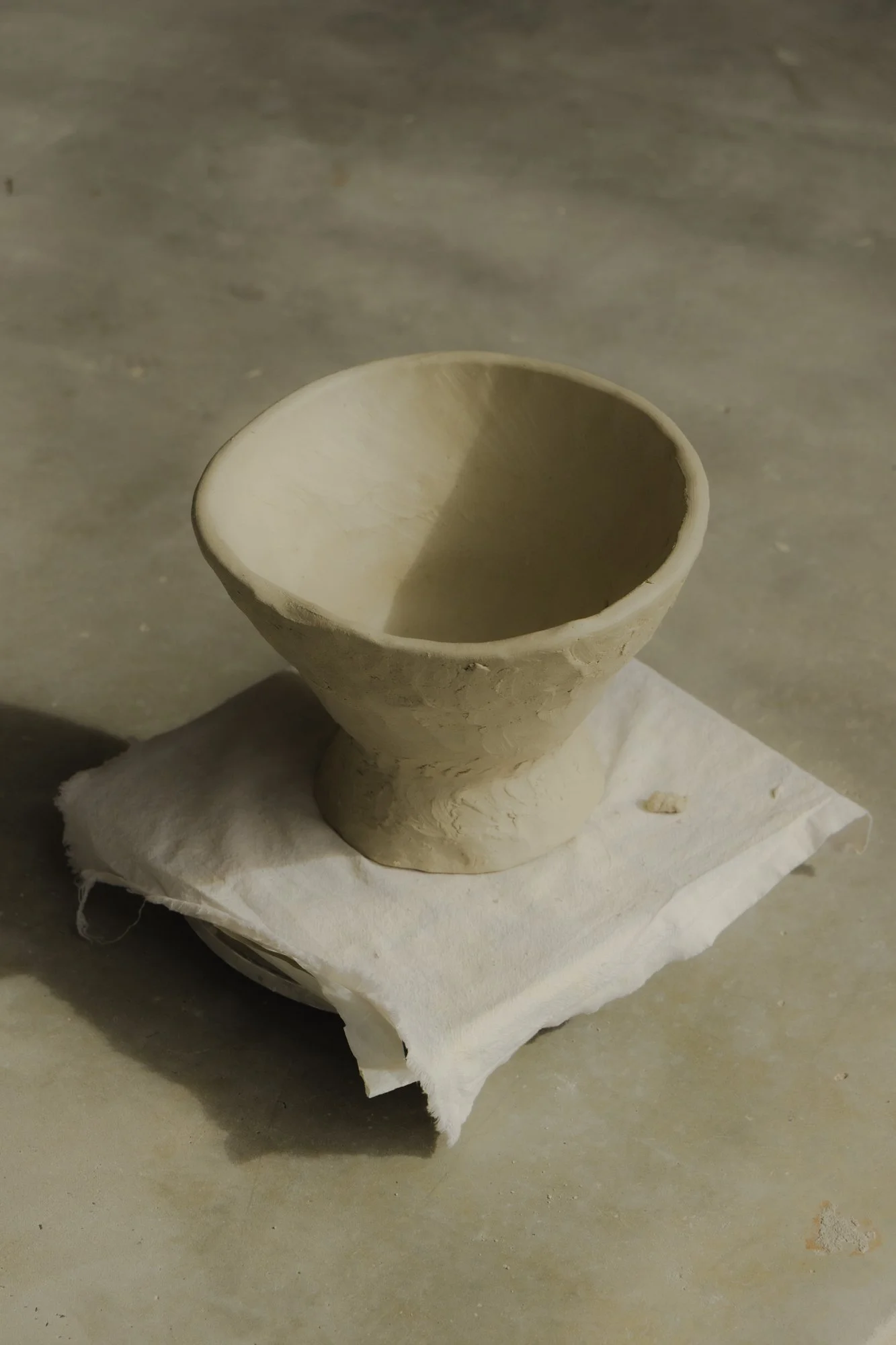
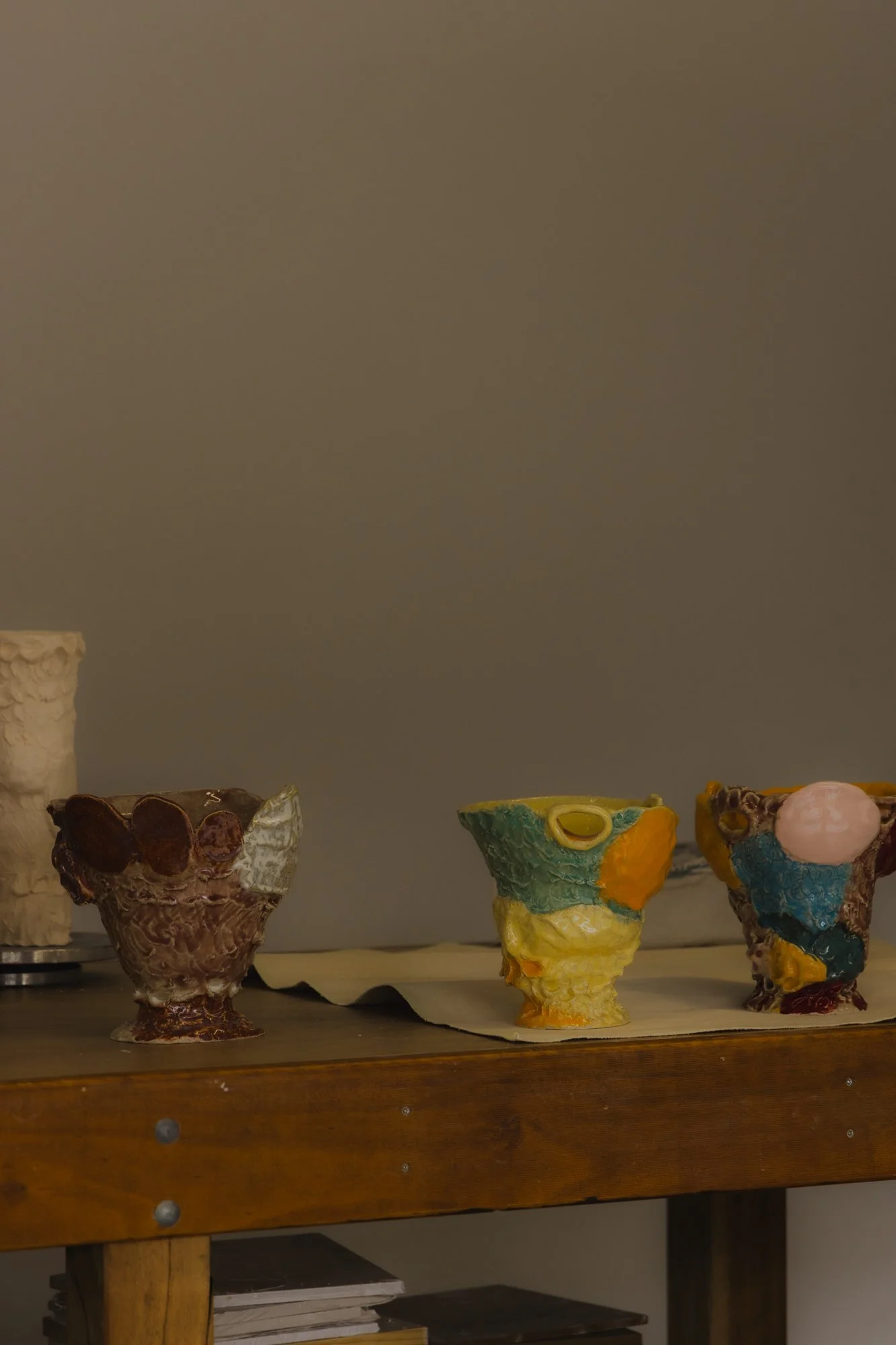
Pazzalotti is a Northern Rivers based ceramics studio creating the sculptural artefacts of our dreams. Each piece feels reminiscent of the euro summer holiday we wish we were on, which is in fact where the origins of the name itself began.
Mitch (aka Pazza) and Rebekah Parry, the creative duo behind the Pazzalotti name, are partners in life and in business. The avowed “texture maximalists” create statement pieces entirely by hand that evolve organically through collaborative play and experimentation. Their process is a true expression of creativity for the sake of it, embracing imperfections and peculiarities as part of the natural emergence of each piece.
“The greatest challenge is patience. Whenever we try to rush the process, ceramics has a way of reminding us not to. It really is the art of going slowly.”
For a creative practice in its early years, Pazzalotti is already making a name for itself in the art and design spheres and has a number of exciting projects in the works. Their joyful approach to form, texture and colour has captured the hearts of many, and it is only continuing to evolve and expand as Mitch and Bek grow in their practice, experimenting with their own glaze formulas and further additions to their collections.
“It is rare that we are both uninspired at the same time. One of us will usually arrive with an idea, a burst of energy or a different perspective, and that becomes something we can share and build upon together.”
We can’t wait to see what the future holds for the Pazzalotti studio. It was a pleasure to get acquainted with Mitch and Bek in their Lennox Head studio and hear a little more about their practice.
MM. What (and who) is behind the Pazzalotti name?
P. Pazzalotti was a name coined by Bek. It began on our first European holiday together, almost a decade ago, as a nickname for Mitch aka 'Pazza.' It represented a fun and fancy alter ego.
When it came time to name this project we were building together, it felt like the natural choice. Pazza means “crazy” in Italian, and our work has always embodied our more uninhibited and expressive sides. Over time, Pazzalotti has taken on a meaning of its own. To us, it means “a lot of crazy.”
MM. How would you describe your aesthetic?
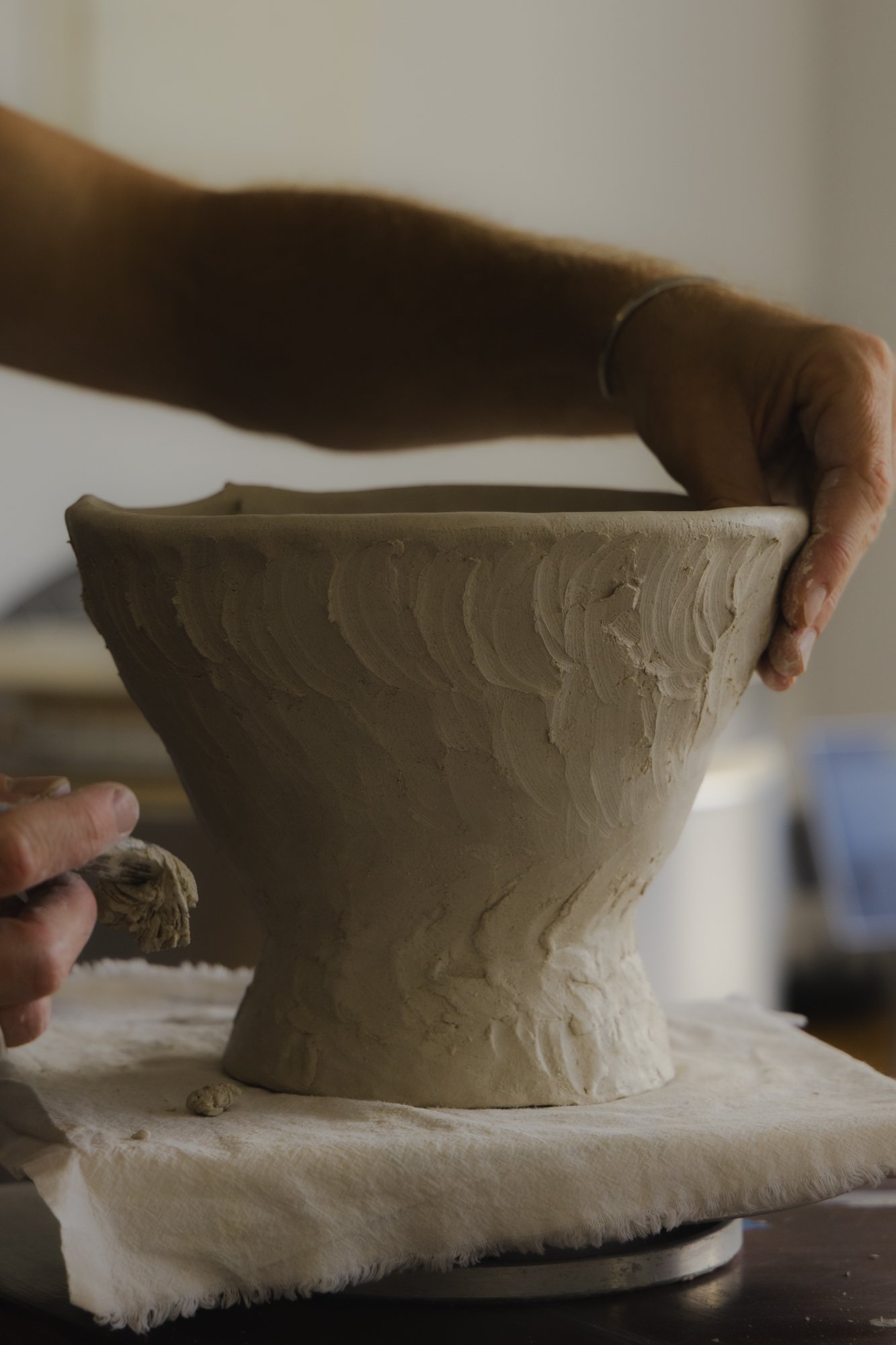
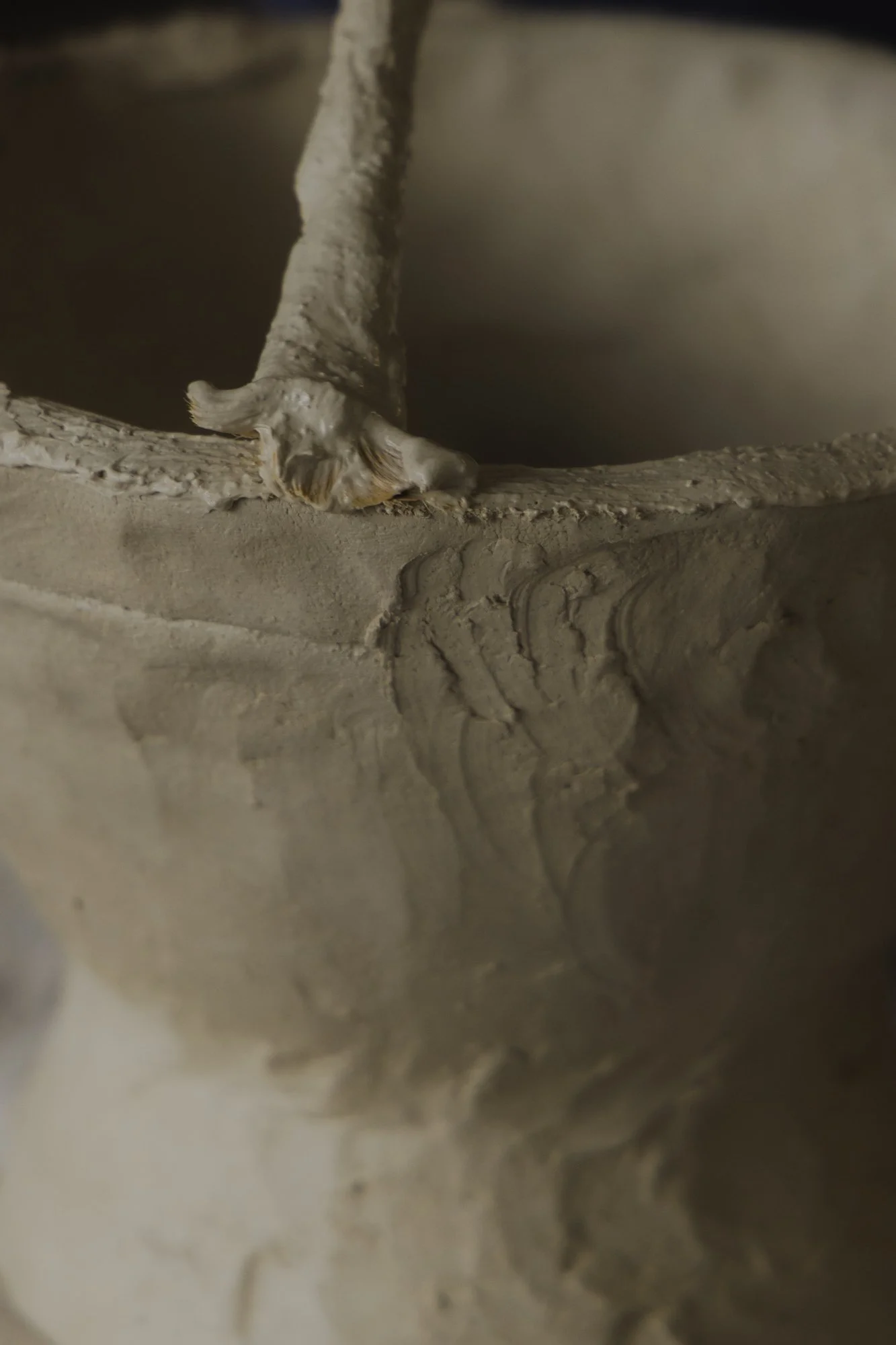
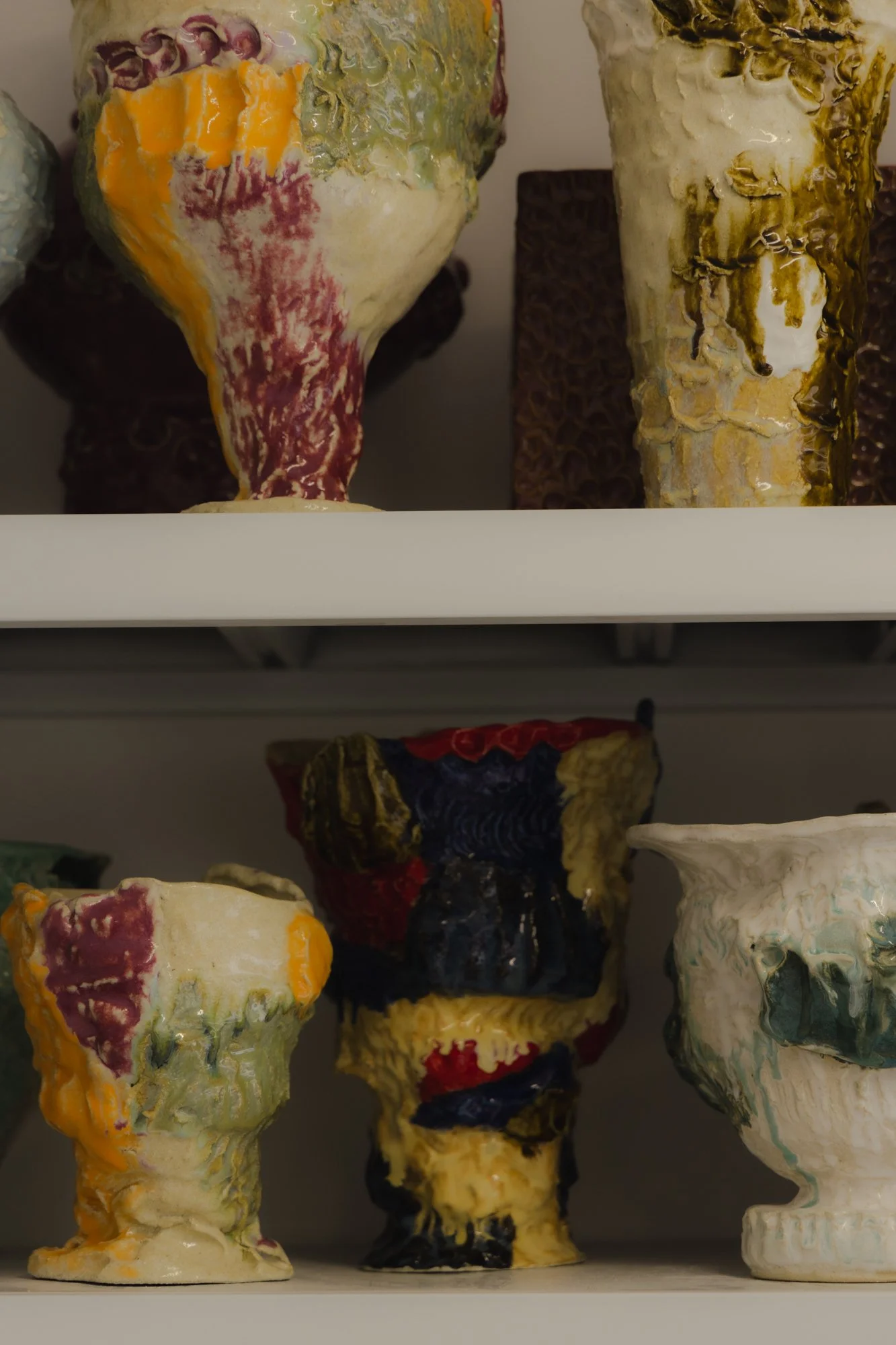
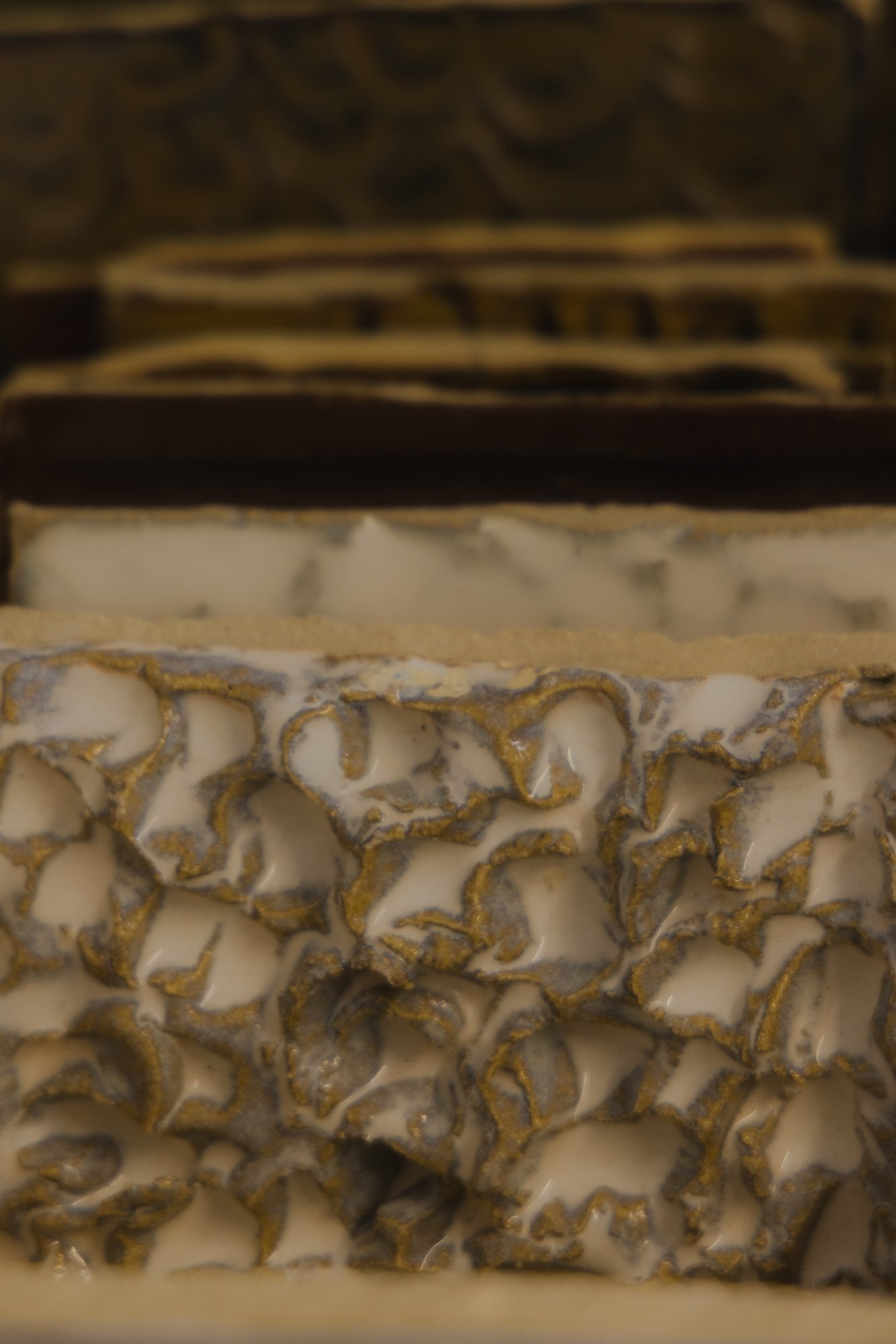
P. We are texture maximalists. Our work is joyful, expressive, painterly and filled with movement. It has a freeing, spontaneous sensibility — like dancing captured in time.
MM. We adore your colour palette, do you create your own glazes or have you spent the time trialling different colours?
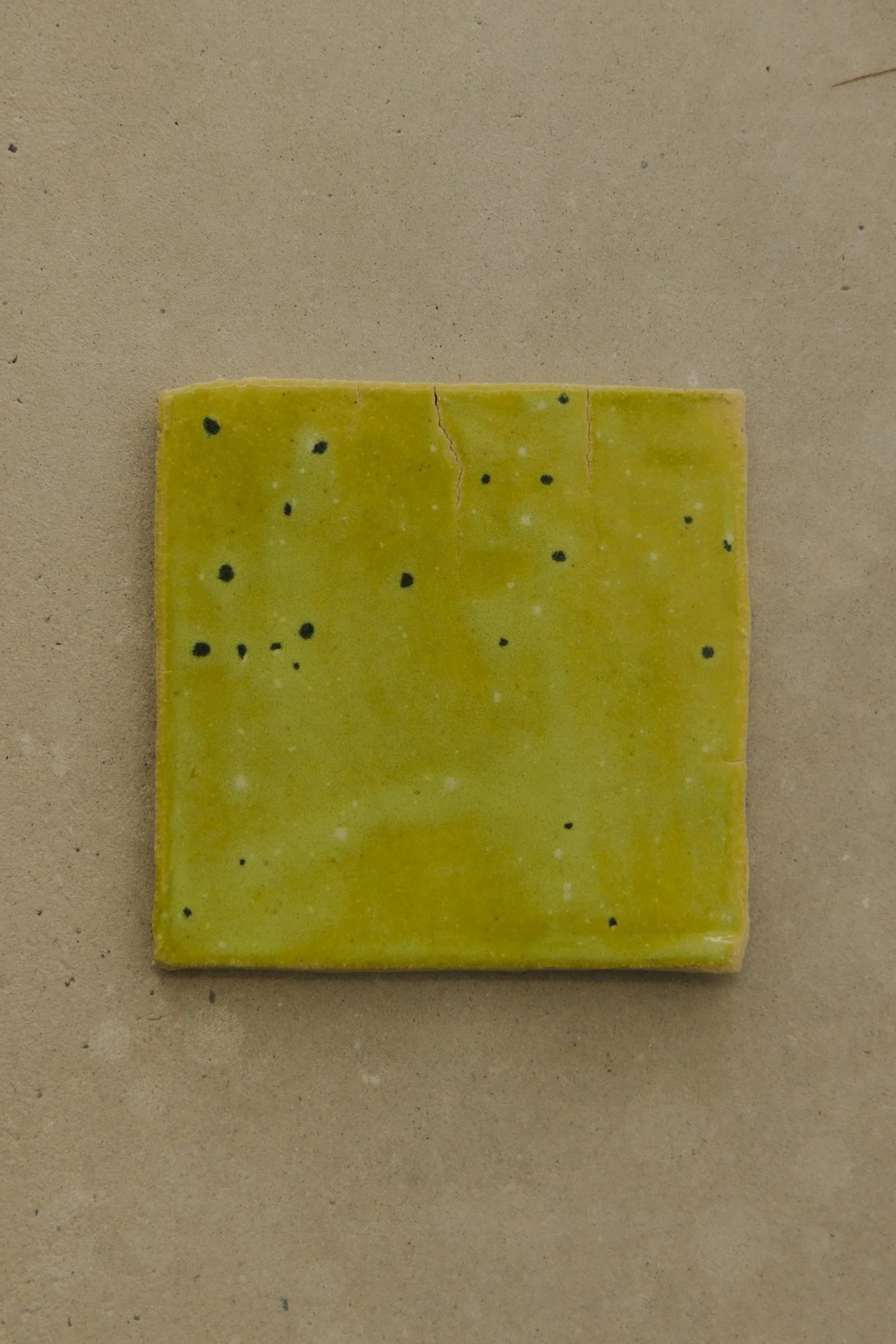
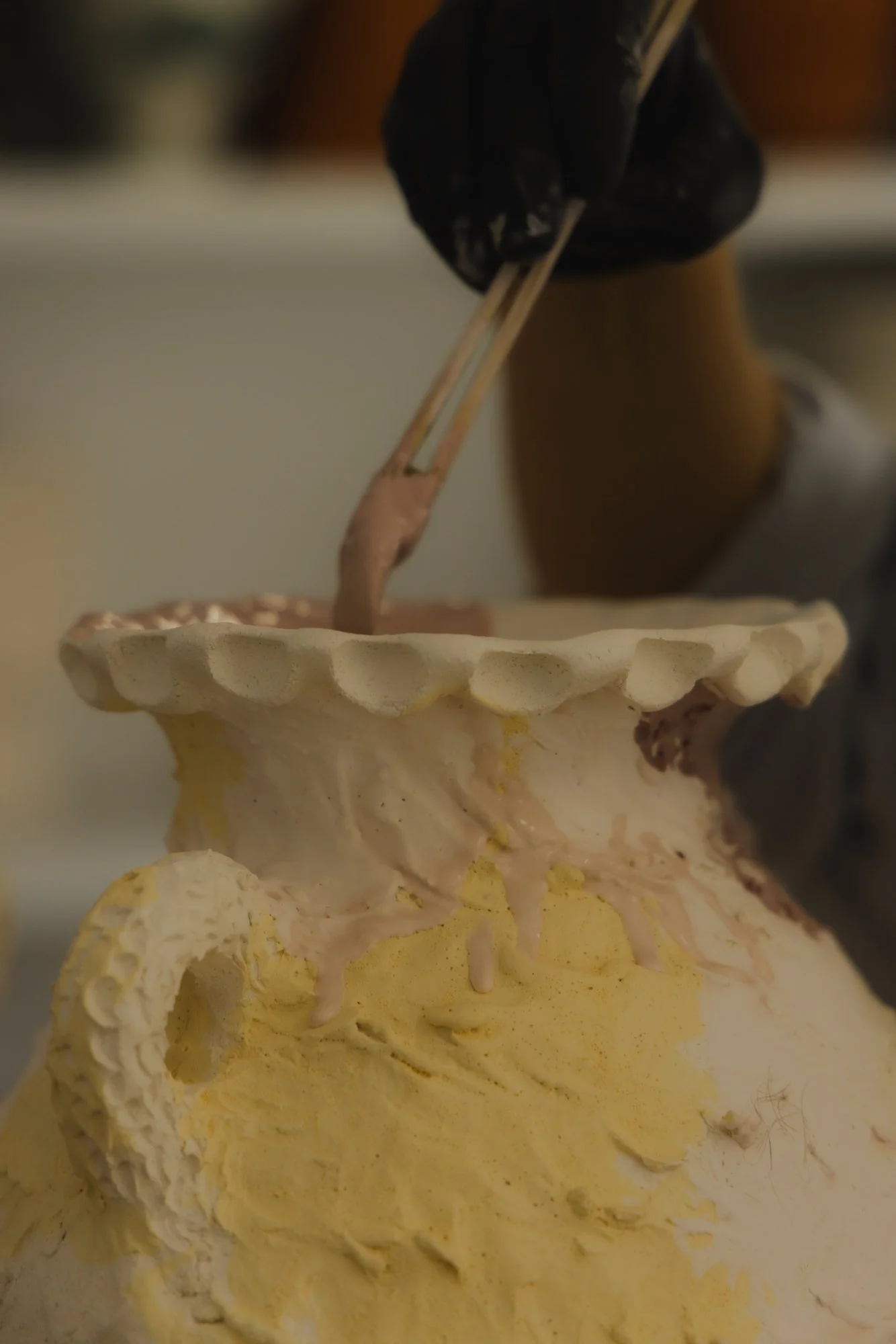
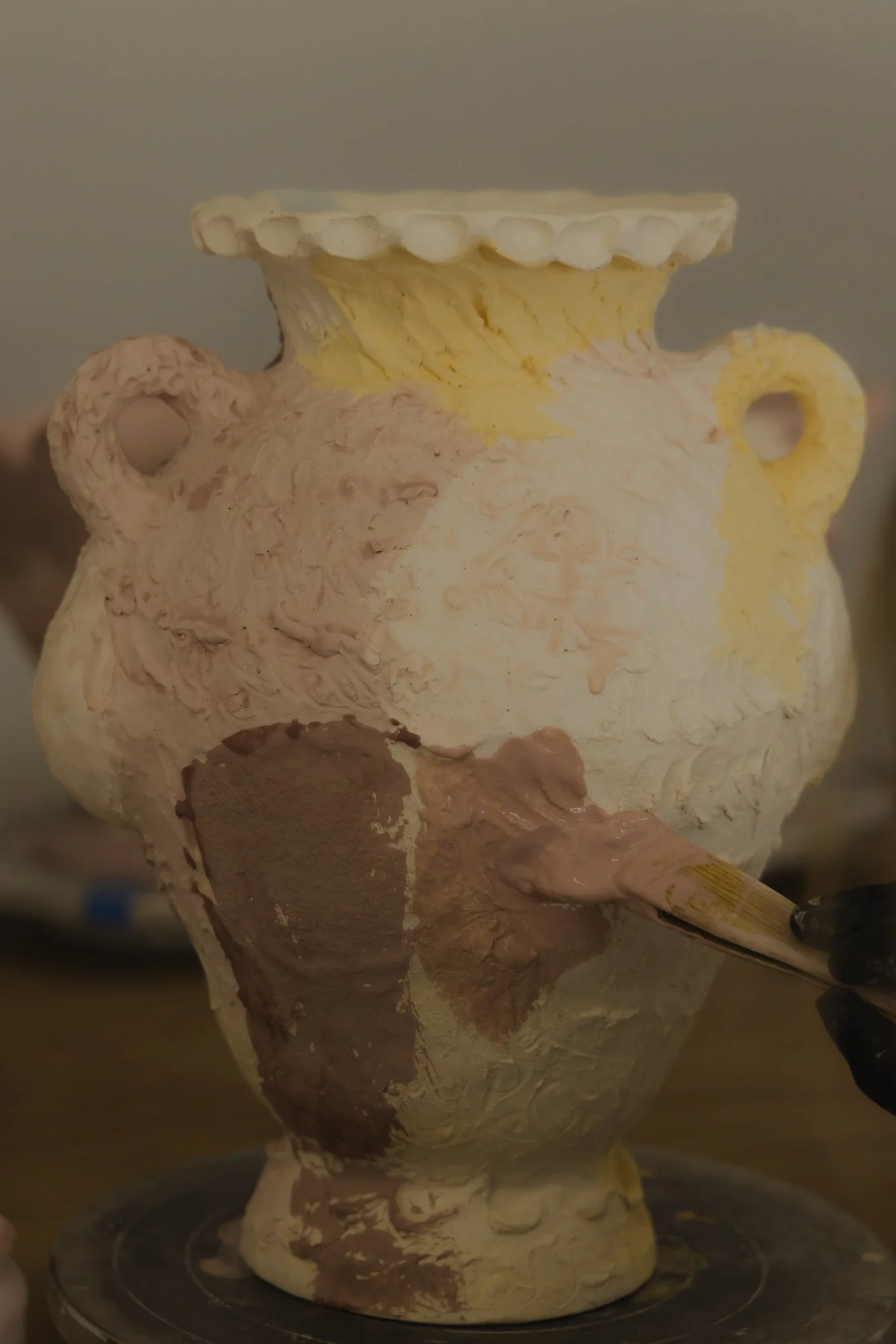
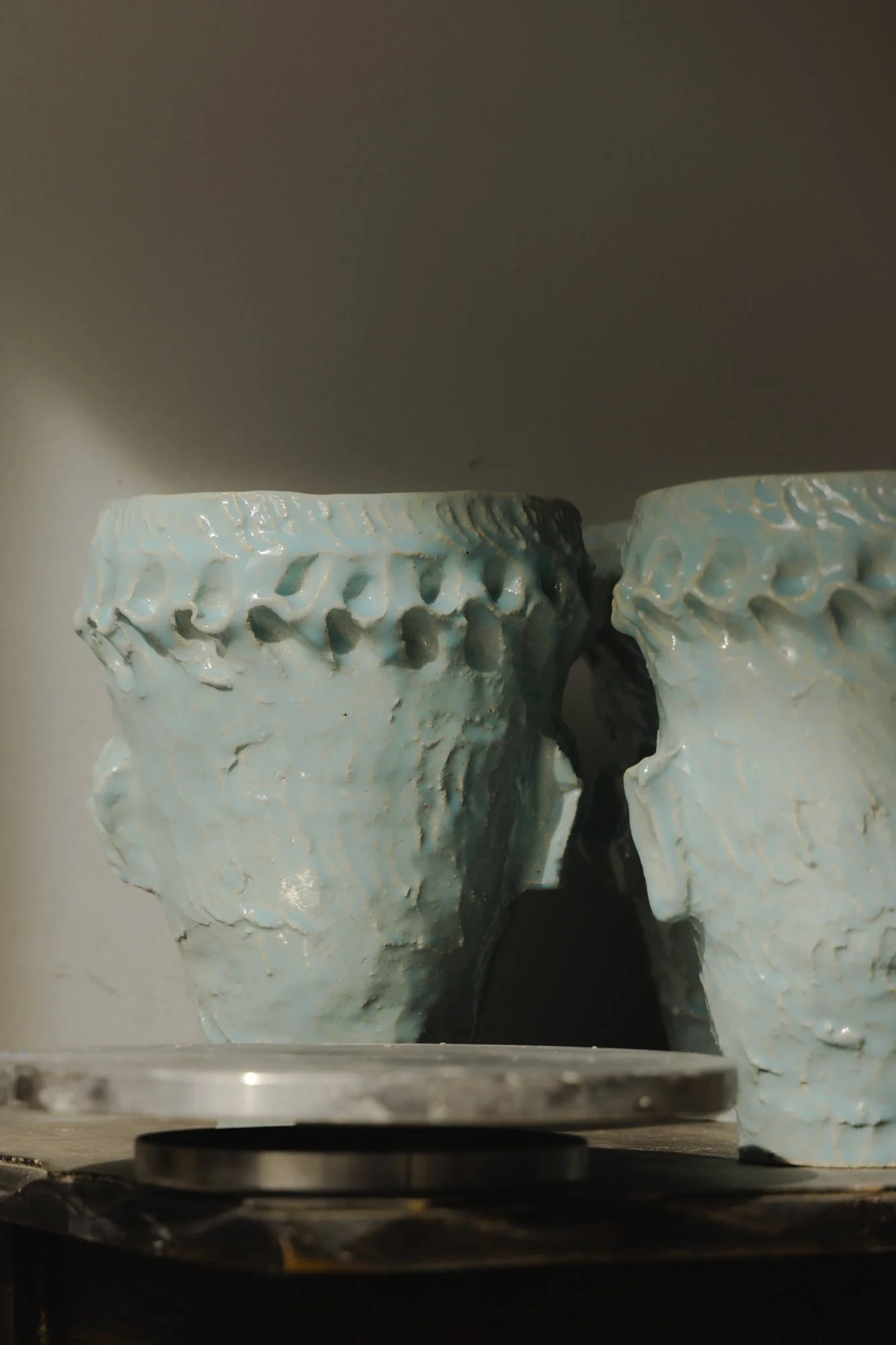
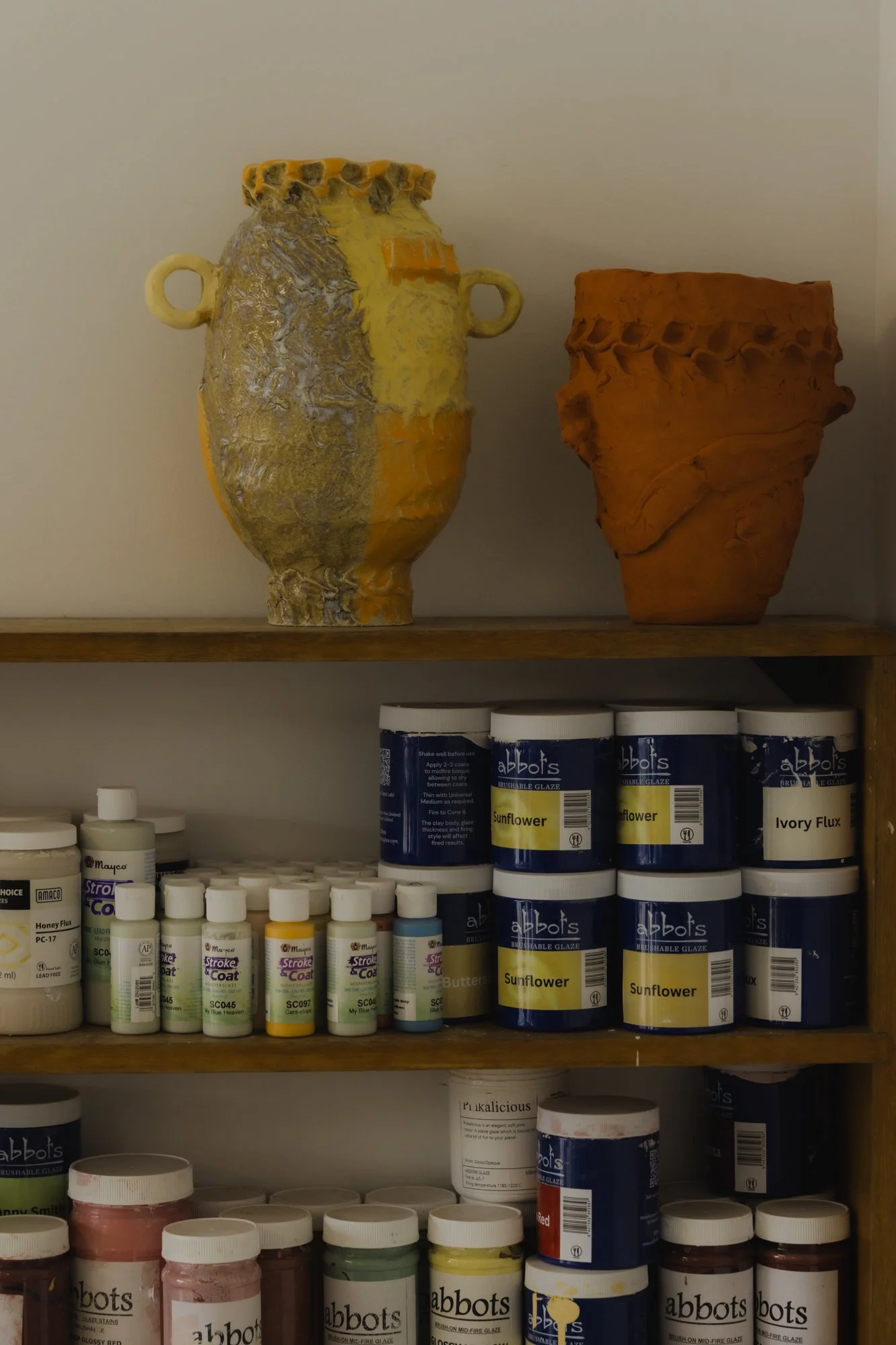
P. At this stage, we don’t formulate our glazes entirely from scratch, but we are very experimental in the way we layer, combine and apply them.
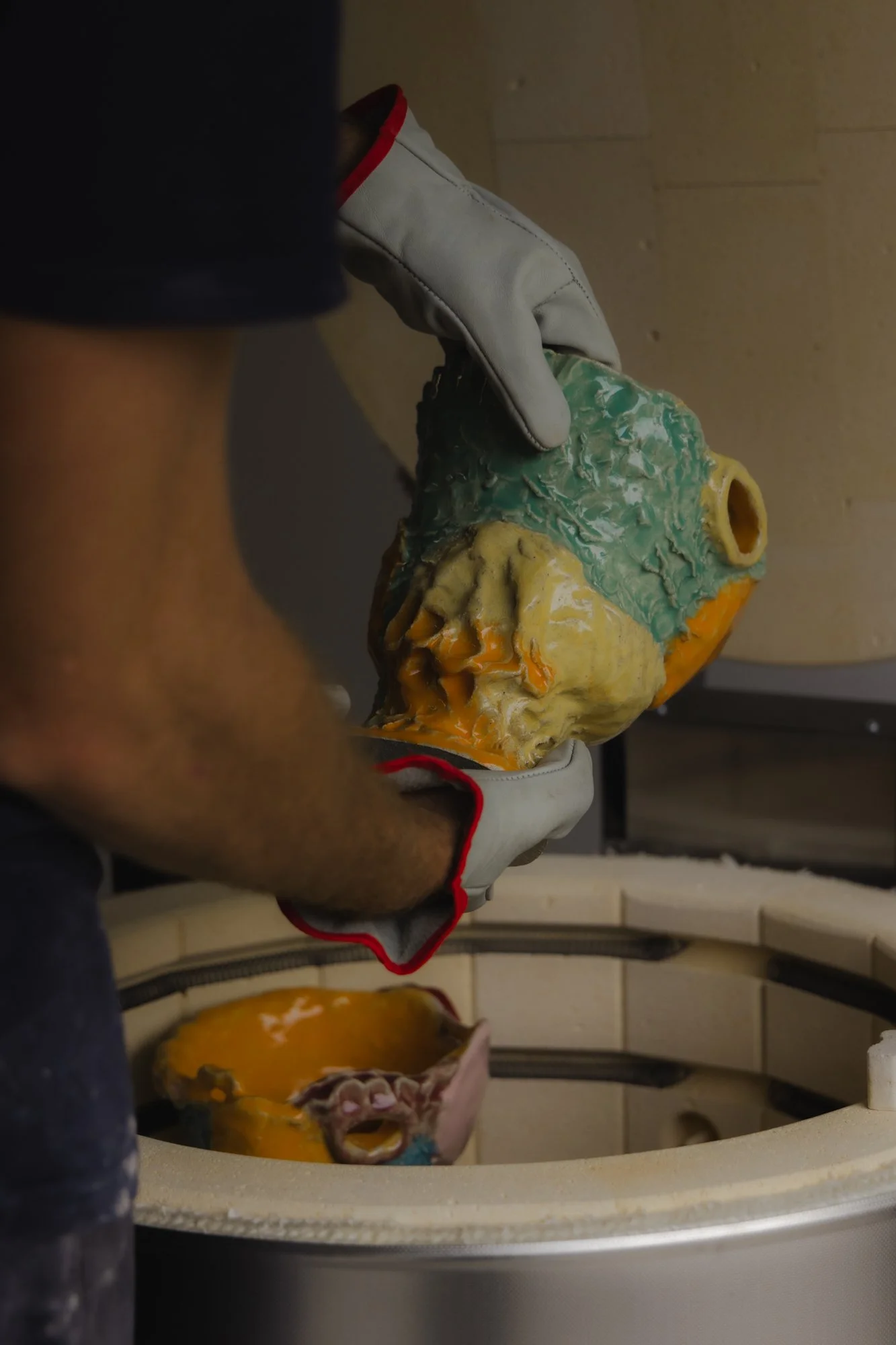
Testing and trialling are a huge part of our practice. We are constantly exploring how different glazes respond to one another and how application, texture and firing can completely transform a glaze.
We are now beginning to study glaze chemistry to develop our own formulas. There are definitely limitations to what we can achieve with existing glazes, so creating our own feels like a natural next step. We are excited to see how this part of the practice evolves.
MM. What are your backgrounds and how did you land in ceramics?
P. We have both always had many creative outlets and projects, both independently and together. Bek studied Fine Arts and has a background as a Creative Director, while Mitch comes from a musical background, but ceramics was an entirely new medium for both of us.
We discovered it together only a couple of years ago, when we signed up for a class as a fun date night. That date night quickly became an all-consuming hobby, took over our garage and eventually became something we felt compelled to share with the world.
It has become a beautiful way for us to connect, play, problem-solve and grow together.
MM. Was there a specific moment when you decided to turn your creative practice into your livelihood or was that always the intention?
P. Not really. There wasn’t a formal plan or a single moment when we decided it needed to become a business.
We have always loved collaborating and have supported one another’s independent creative projects over the years. Pazzalotti developed very organically. We kept making, experimenting and sharing the work, and the project gradually began to take on a life of its own.
In many ways, it just happened and we followed it.
MM. Your business is still young, yet you have achieved so much already! What have been the key milestones for you so far?
P. It is still incredibly young, and we have been so excited and grateful for the way the work has been received.
Within a couple of weeks of launching, we were fortunate to begin stocking pieces with Tigmi Trading, which was a very special early milestone for us.
We have also been developing an exciting collection with another dream partner, which will be released next month, and recently took part in a group exhibition with Rainbow Studios alongside an incredible group of artists.
We are now focusing on developing a new body of work and expanding the practice into more sculptural objects, furniture and lighting.
MM. What does a day in the studio look like? Do you go with the flow or is there a process you follow to keep things in check?
P. A studio day usually begins with a check-in and a loose plan.
Mitch will often reset the space, organise materials and prepare everything for the day, while Bek is throwing ideas around the room and imagining what could happen next.
Recently, our roles have naturally started to shift. Mitch has been building much of the work, while Bek has been focusing more on concept development, form, colour and glazing. We listen to music, dance, laugh, critique one another’s work and try to find harmony between our different ideas.
We usually have many pieces evolving at once. Lately, we have been working on commissions and projects with tighter deadlines, so we have had to introduce more structure into our studio days. Even so, the way we build remains very intuitive and free-flowing.
We also make time to play without a predetermined outcome. That is often where our best ideas appear. Sometimes it is as simple as turning an old piece upside down, pairing it with something unexpected or asking, “What if?”
MM. Creating ceramics is a long and involved process. What is the most challenging aspect of creating such intricate pieces?
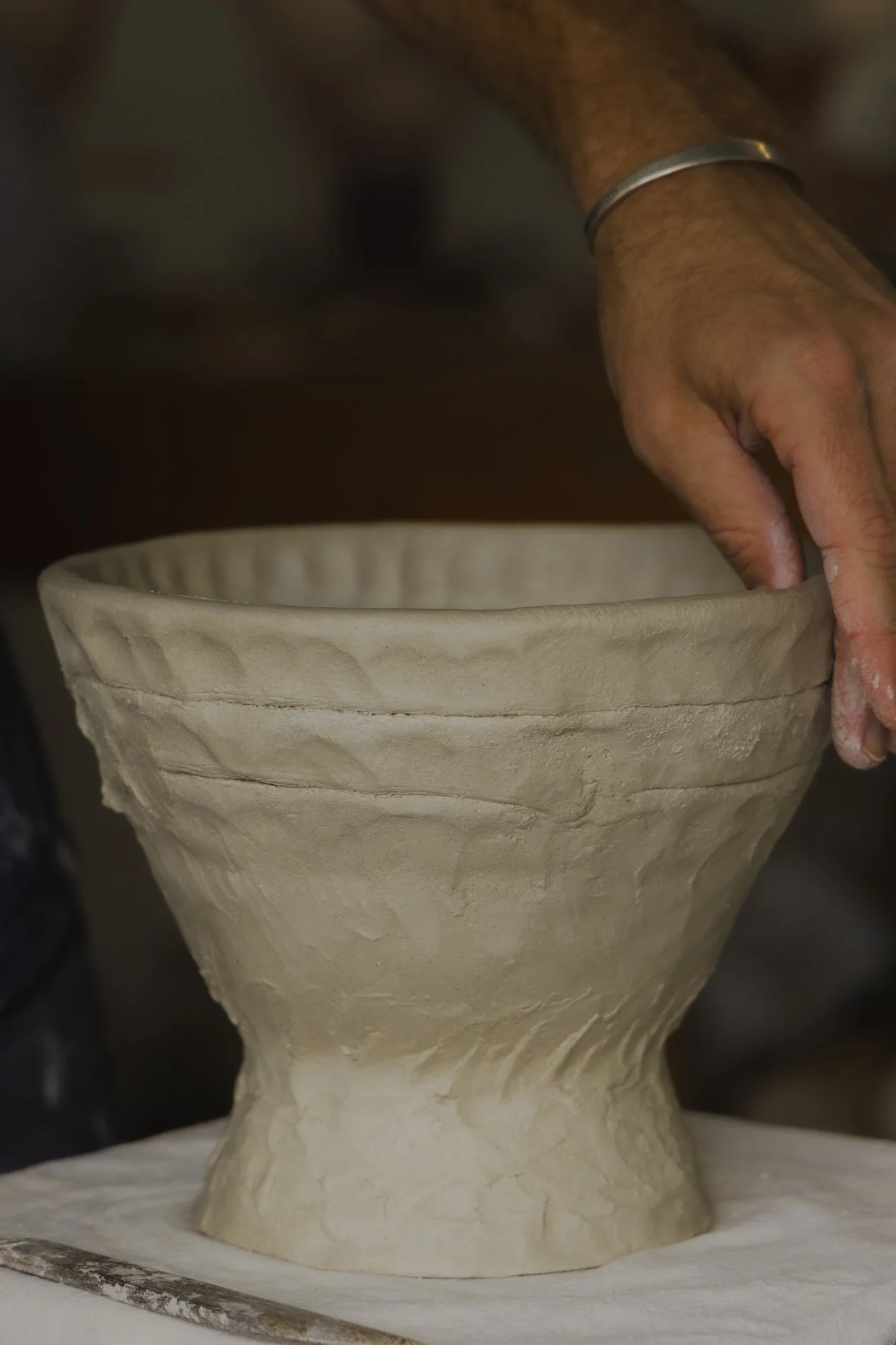
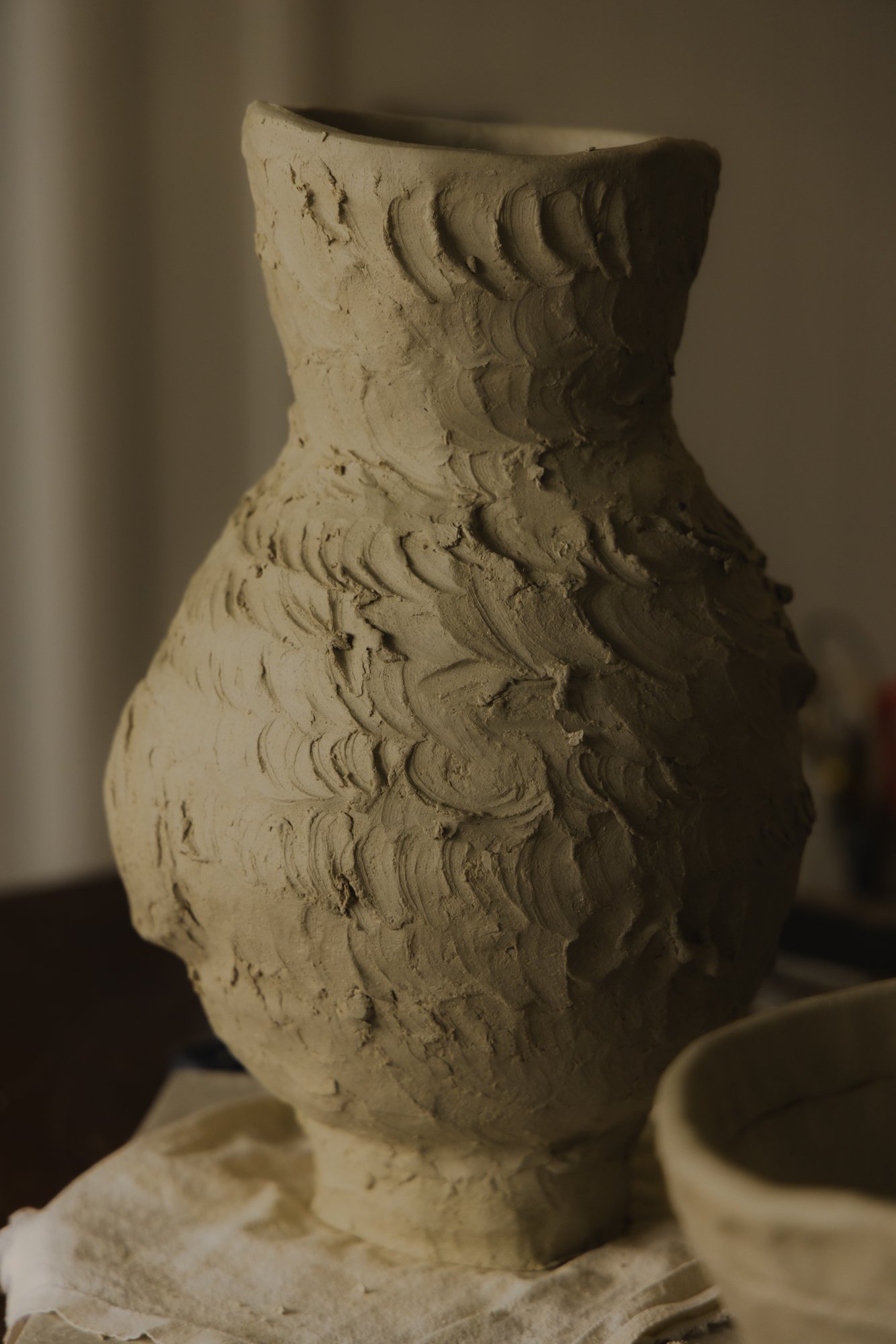
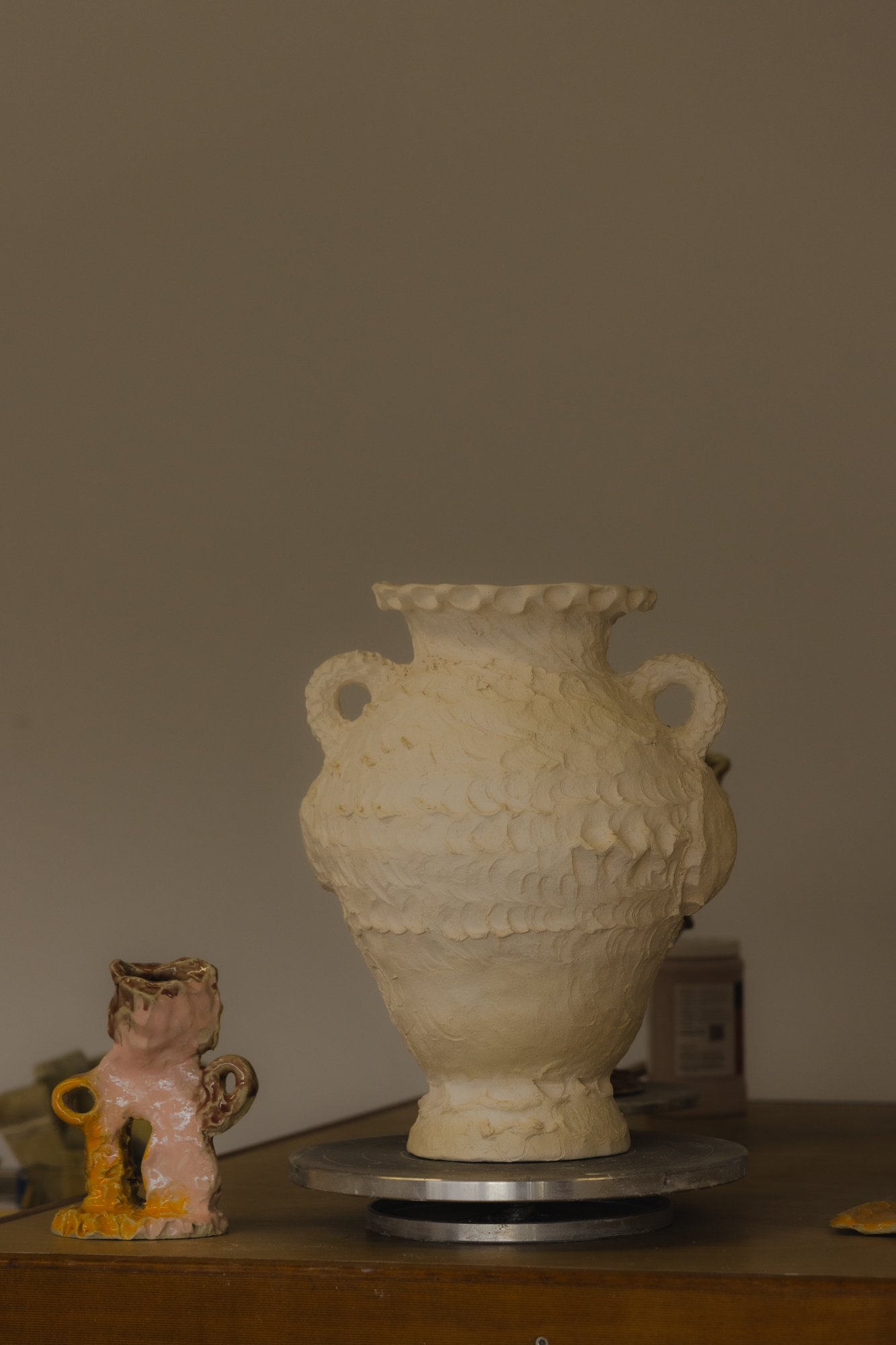
P. We wouldn’t necessarily describe the work as intricate — it is generally quite substantial — but there are many interconnected stages and variables involved.
Humidity can affect how quickly we are able to build and scale a piece. Then there is the drying process, the first firing, glazing, the final firing and all of the planning required in between.
We are both naturally drawn to making at a larger scale and find working small quite challenging, which is probably why the pieces keep getting bigger.
The greatest challenge is patience. Whenever we try to rush the process, ceramics has a way of reminding us not to. It really is the art of going slowly.
MM. How does creating with your hands fill your cup?
P. There is something about working with clay that teaches you who you are. It is difficult to explain, but it can feel like a process of both unravelling and revealing.
As a couple, it gives us another way to communicate. It creates space for play, conceptual conversation, problem-solving and discovery. It is incredibly rewarding to build something together that neither of us would have created independently.
More than anything, it’s just fun. We genuinely love doing it.
MM. Is there anything new you have been experimenting with?
P. We have been experimenting with ceramic wall works, lamps and furniture.
There has been a lot of prototyping, testing and problem-solving as we explore how the language of our vessels can translate into functional and sculptural objects.
MM. How do you reignite creativity when you are feeling uninspired?
P. We often return to existing work and try to change our point of view.
We might turn something upside down, place one object on top of another, rearrange pieces around the studio or bring together forms that were never intended to meet. Changing the context of an object can suddenly reveal an entirely new idea.
Mostly, though, we reignite creativity through each other. It is rare that we are both uninspired at the same time. One of us will usually arrive with an idea, a burst of energy or a different perspective, and that becomes something we can share and build upon together.
Words. Rachel Thatcher
Images. Zali Rae