
Edition 03. Sara Darling
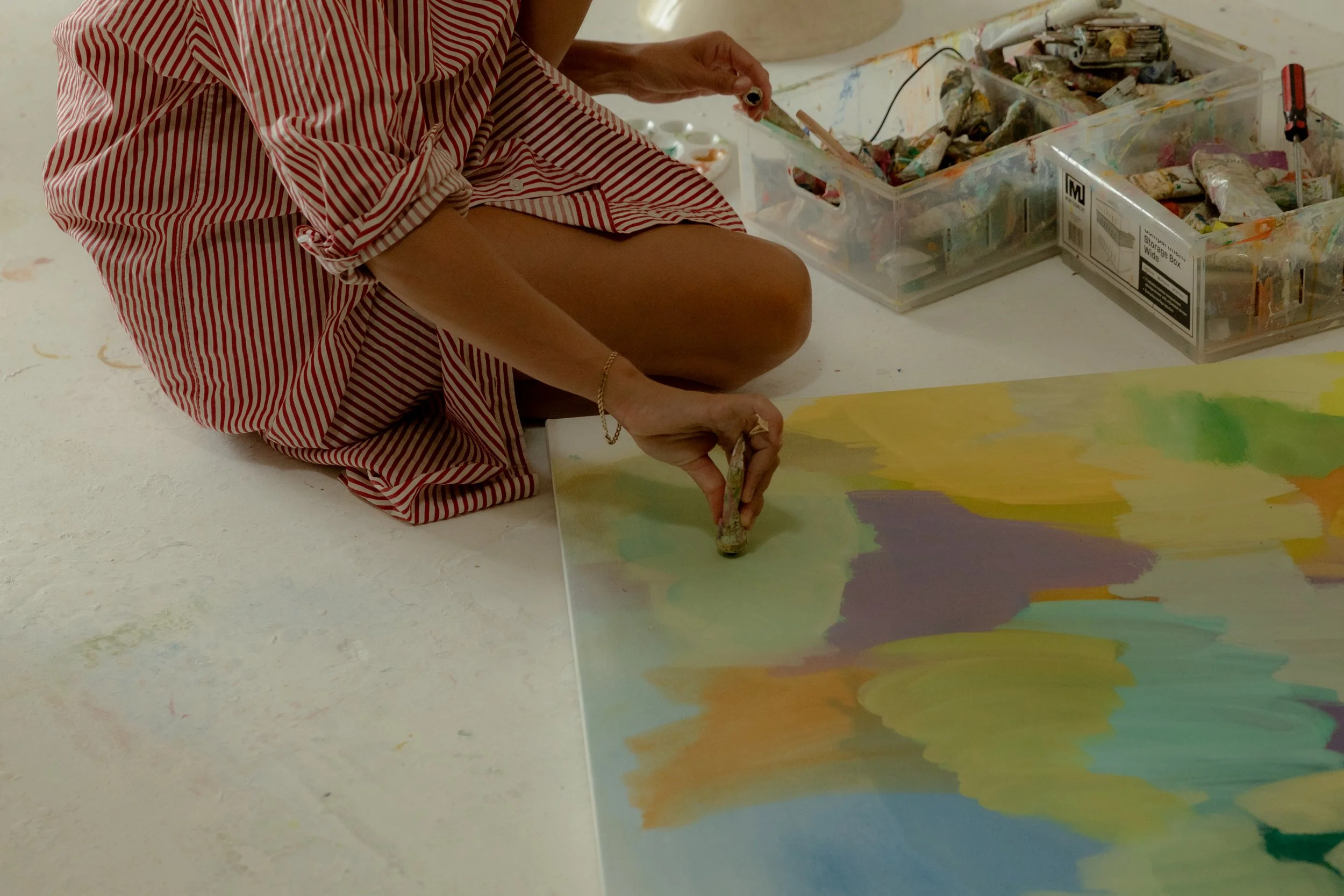
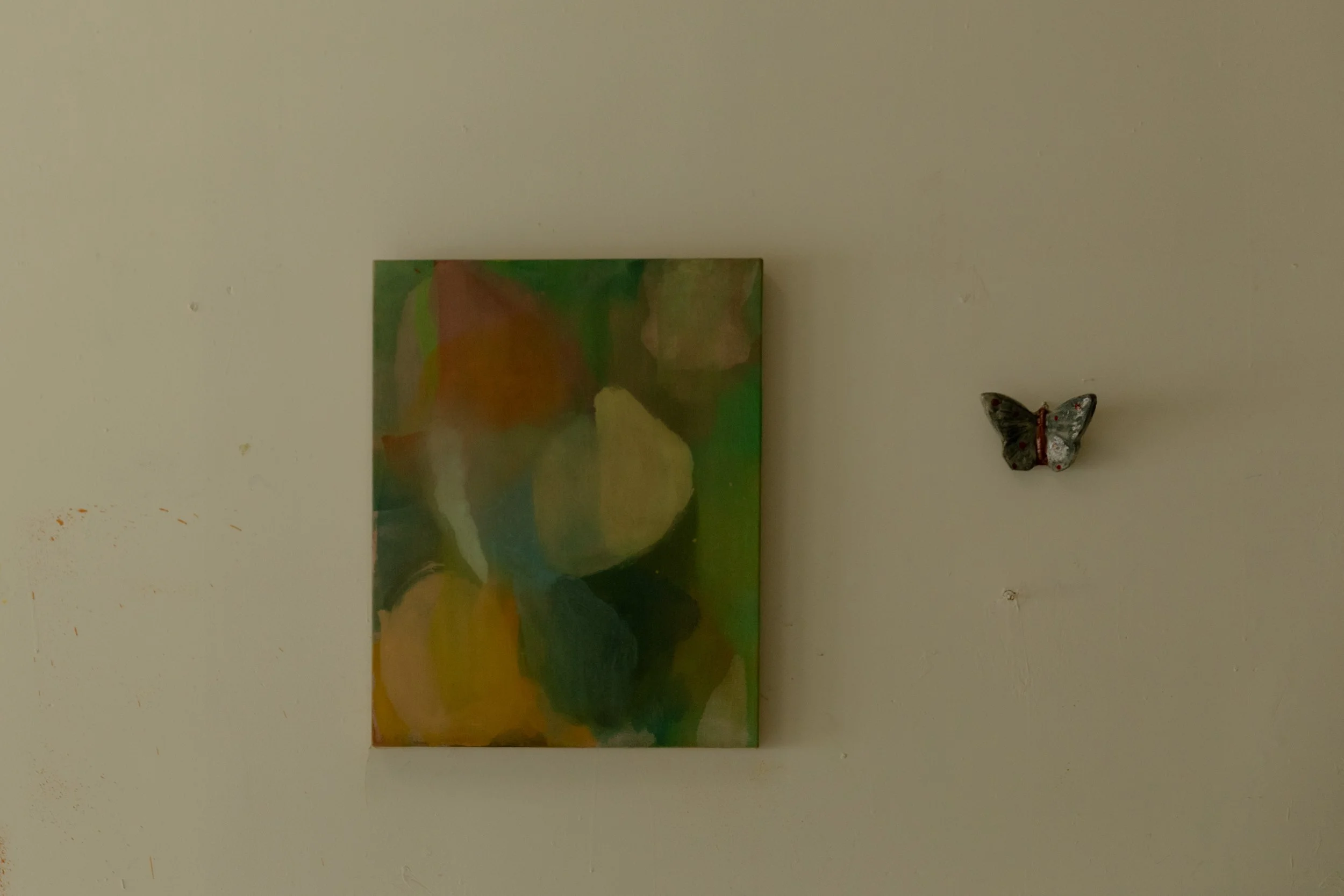
Sara Darling has an ease about her that translates effortlessly onto her canvas. Her paintings evoke a sense of warmth and softness expressed through layer upon layer of dreamlike colour and texture..
Whilst each piece often begins with a memory, they soon evolve into what Sara describes as “colour conversations”, with the act of painting itself transforming the initial inspiration into something else entirely. What remains feels reminiscent of the sensory curiosities in life.
Having grown up surrounded by art and with a natural inclination toward artistic pursuits and tactile experiences, Sara eventually undertook formal studies in interior and spatial design followed by a degree in fine art. She admits that the way she blends colour would horrify some of her teachers, but we love that about her works and it has certainly not been at a disadvantage to the end result in our humble opinions.
“It is sometimes technical but also sometimes intuitive and unconventional. I also mix onto the pallet, directly onto the painting, onto the table, a random piece of glass or literally anywhere.” - Sara Darling
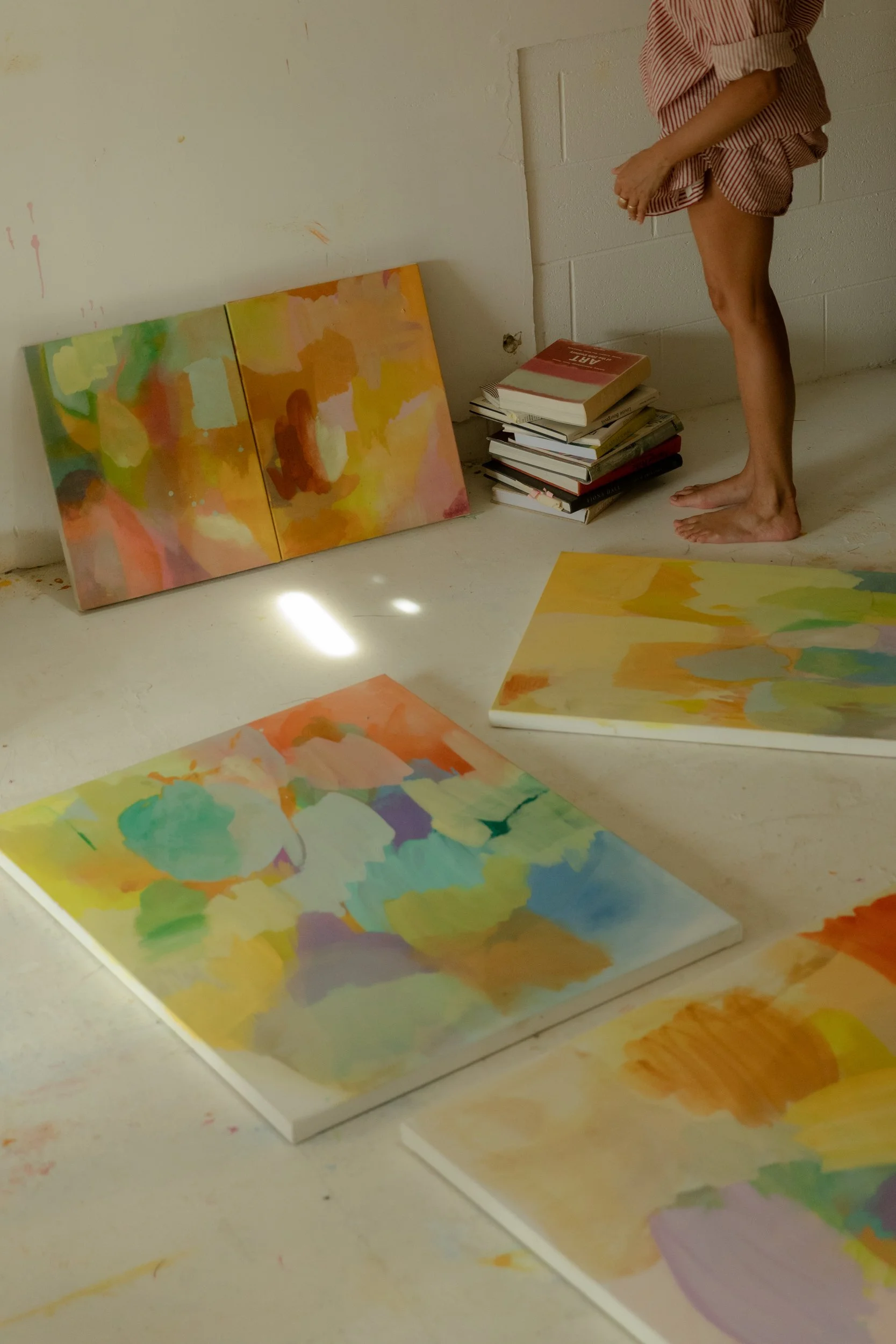
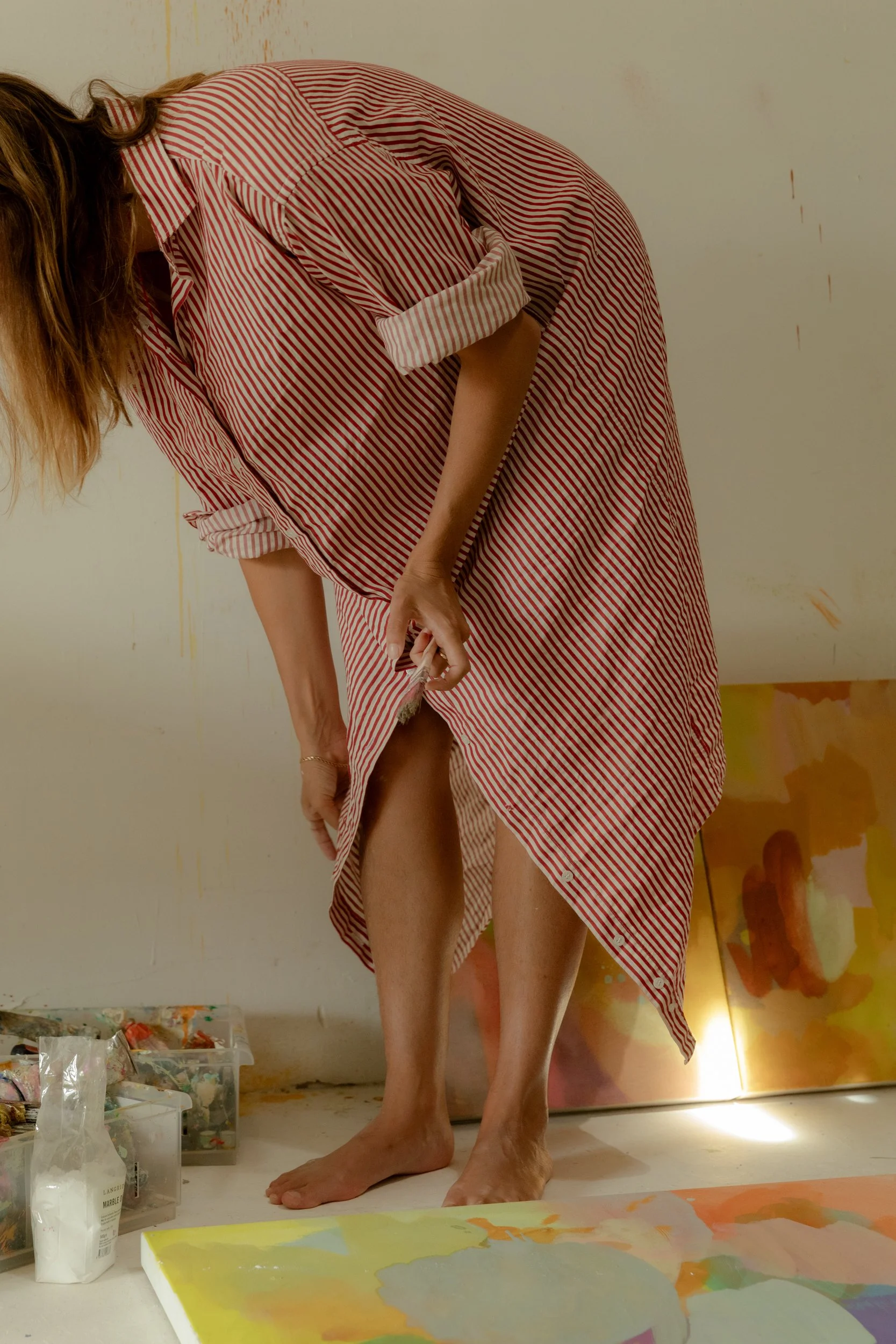
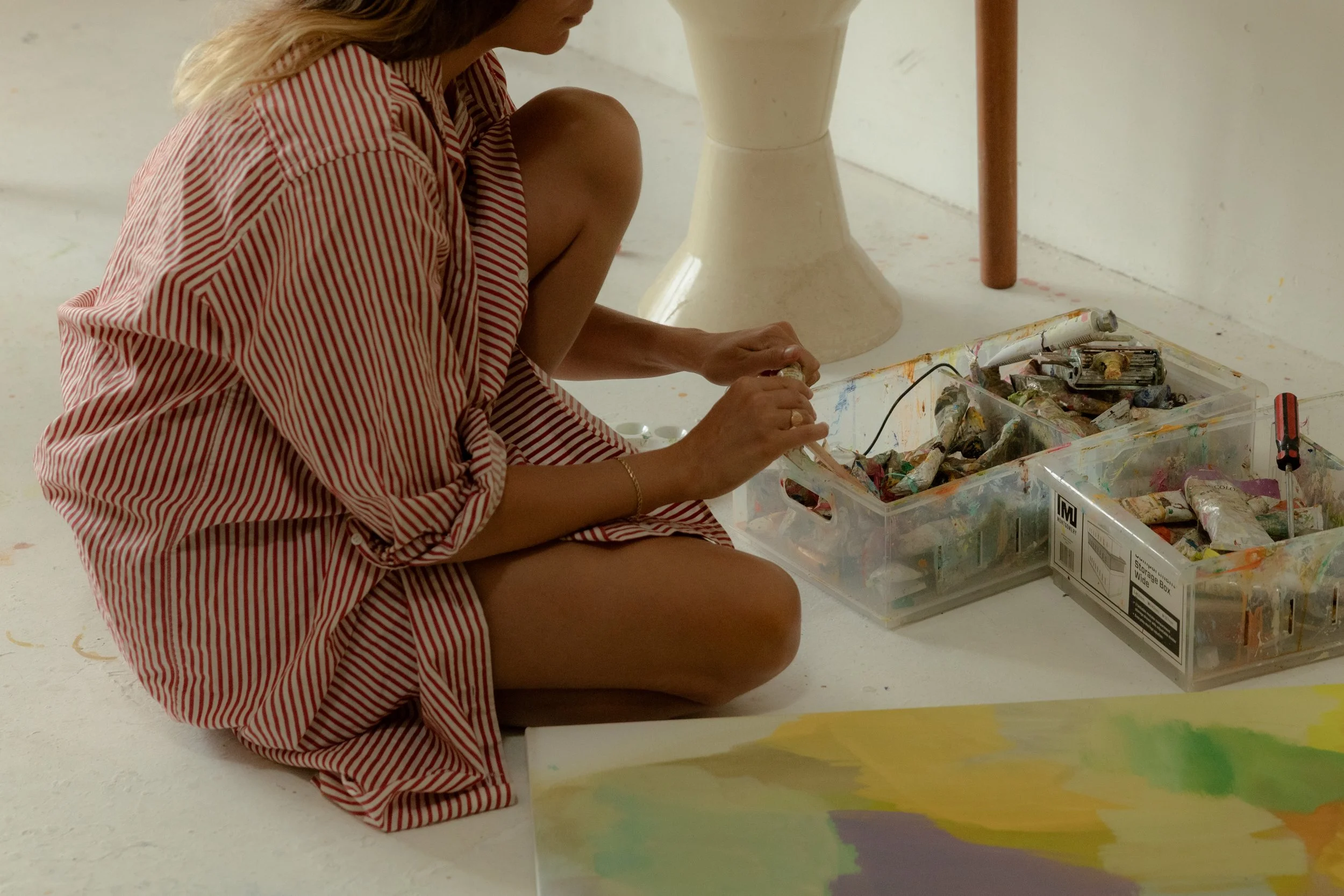
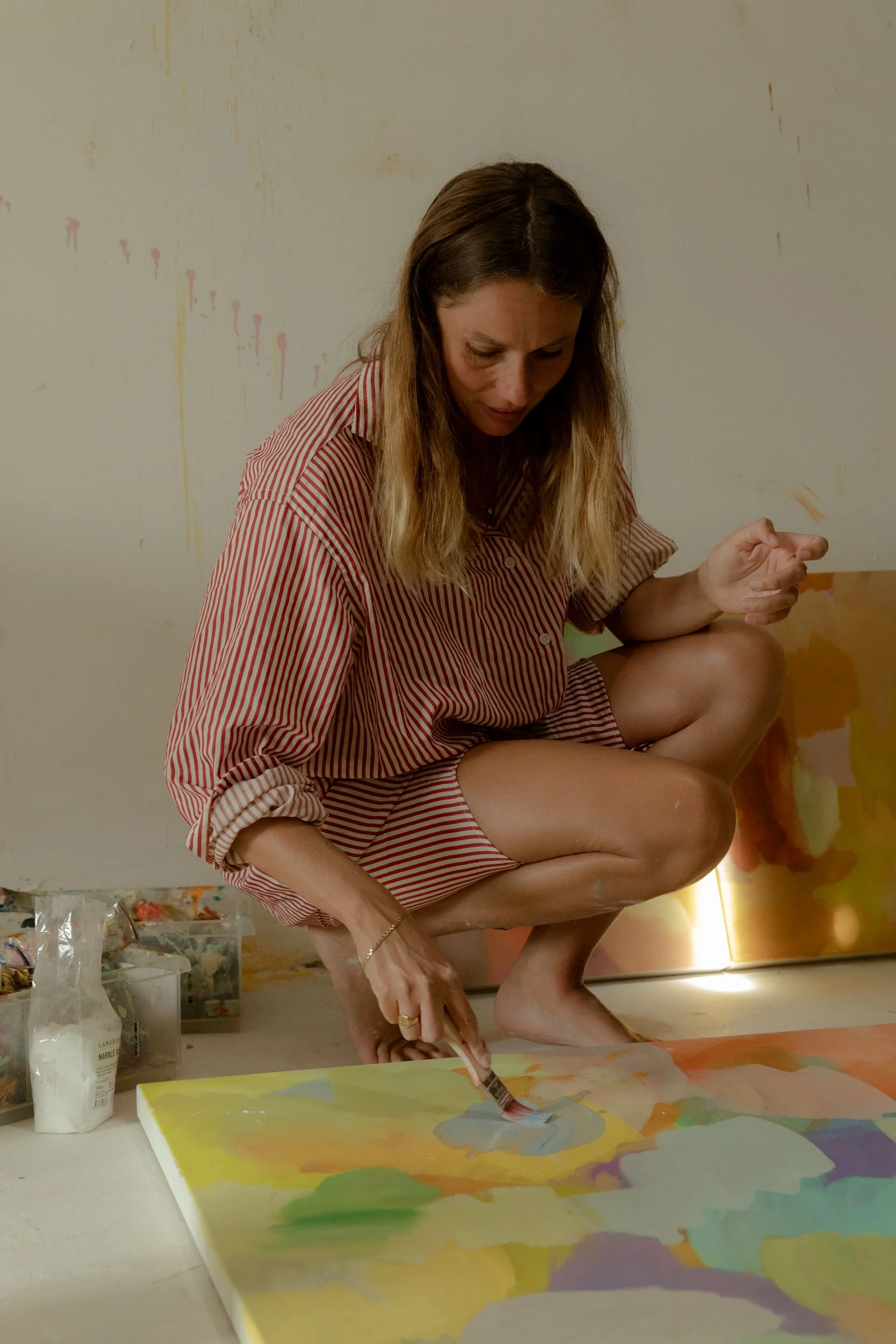
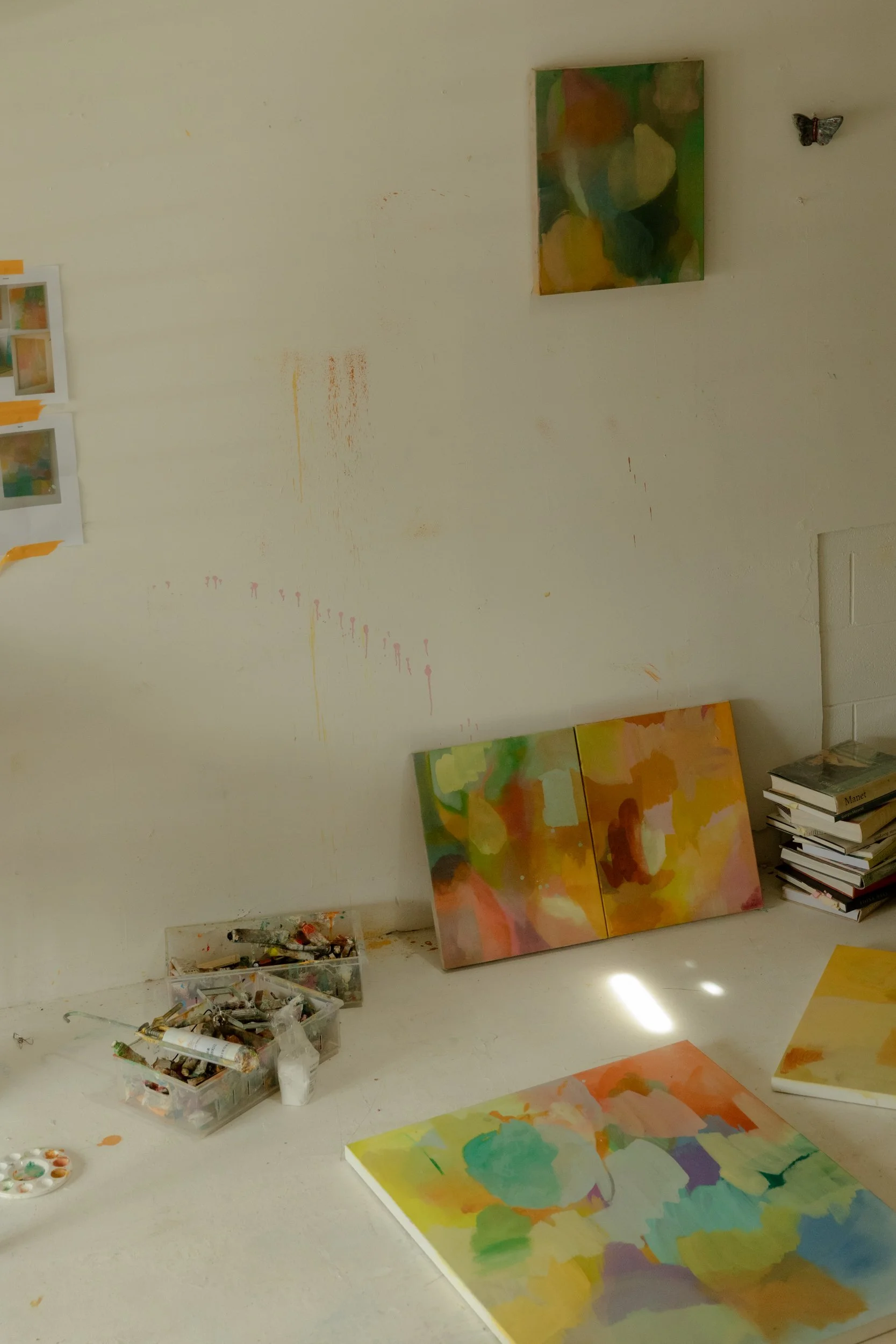
Now based on Bundjalung Country in the Northern Rivers of NSW, we recently visited Sara at her home studio. It is clear her love of colour is not just limited to her paintings, with cheerfully coloured furniture and objects layered throughout alongside her works in progress on the walls. We discuss all things creativity, including how she fits painting into her life where she can between raising two young boys and working on her online gallery, Agnes Contemporary. More on a day in the life of Sara Darling below.
MM. Your paintings feel like a portal! I am lucky enough to have one hanging on my wall and I am always transported underwater when I see it. How would you describe your works?
SD. My paintings are abstract colour explorations at their essence. They are very much about the act of painting itself, while they may begin from outside inspiration or memories they often end up material and process led. The materiality of the paint, the brush, the linen and then the colour conversations and internal compositions start to take over, fading away and transforming the initial ideas.
MM. What attracted you to art and painting as a creative pursuit? Was there a moment you knew you wanted this to be your career?
SD. I think I always new that my brain worked in a visual way, especially at school. I was most comfortable in the art and design and technology rooms. Working with my hands, with physical, tactile objects always made the most sense to me. I grew up surrounded by art so this way of life was normalised from a young age and I often met full time artists making it work. I did finish school and I did the classic how do I make a career out of this questioning, which led me initially to a degree in interior and spatial design.
My favourite part of the degree was by far doing technical drawings by hand and making models as well as the conceptual work at the beginning of a project, the parts that related more closely to art. At this point I had friends who were out of art school and were paving art careers and I was starting to feel drawn more to this world. I was going to lots of galleries and openings and I was reading a lot about art. I think this was when I started thinking about art over design.
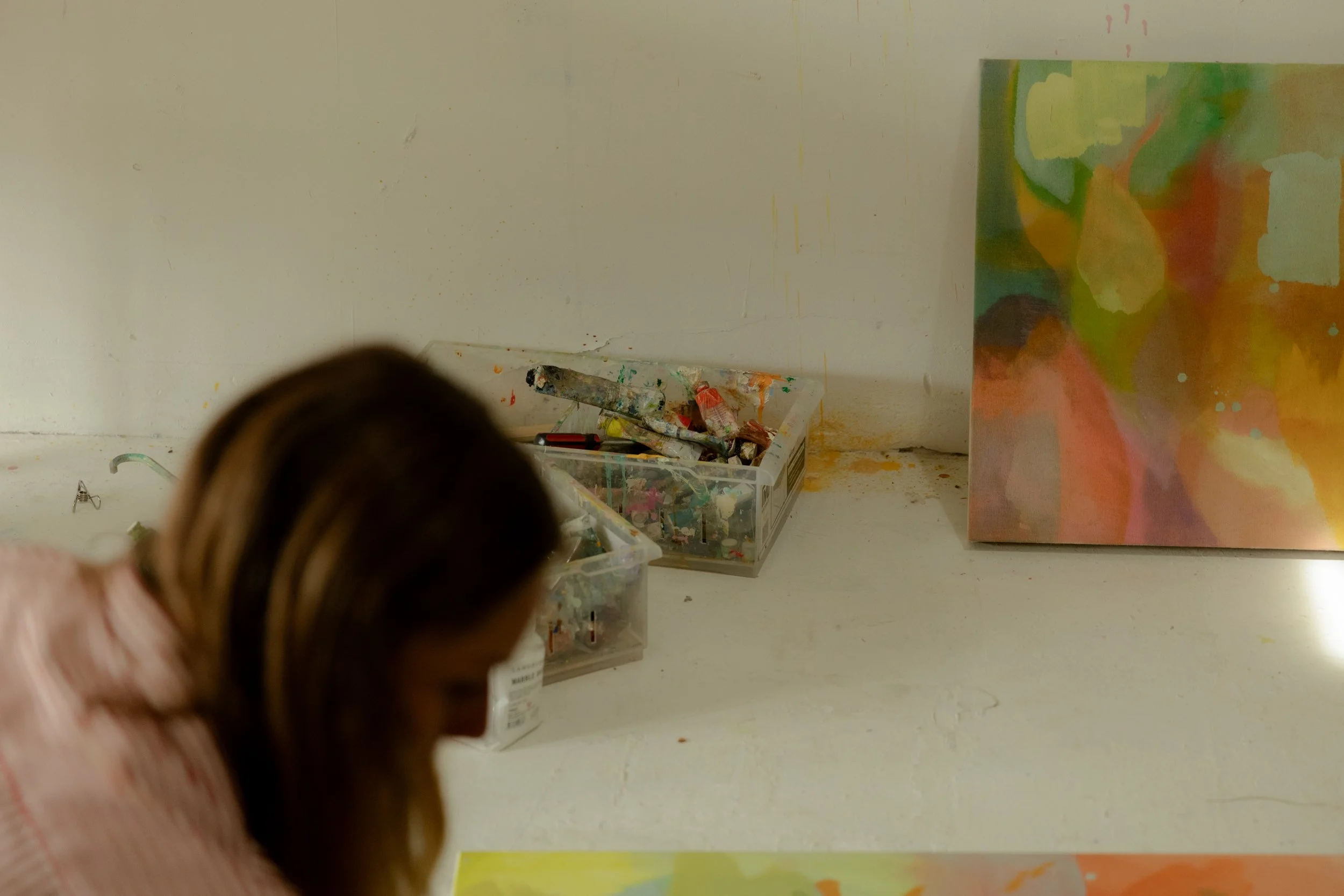
MM. I love that you embrace colour in all facets of your life. Is there a process to blending colours on the canvas or is it down to trial and error?
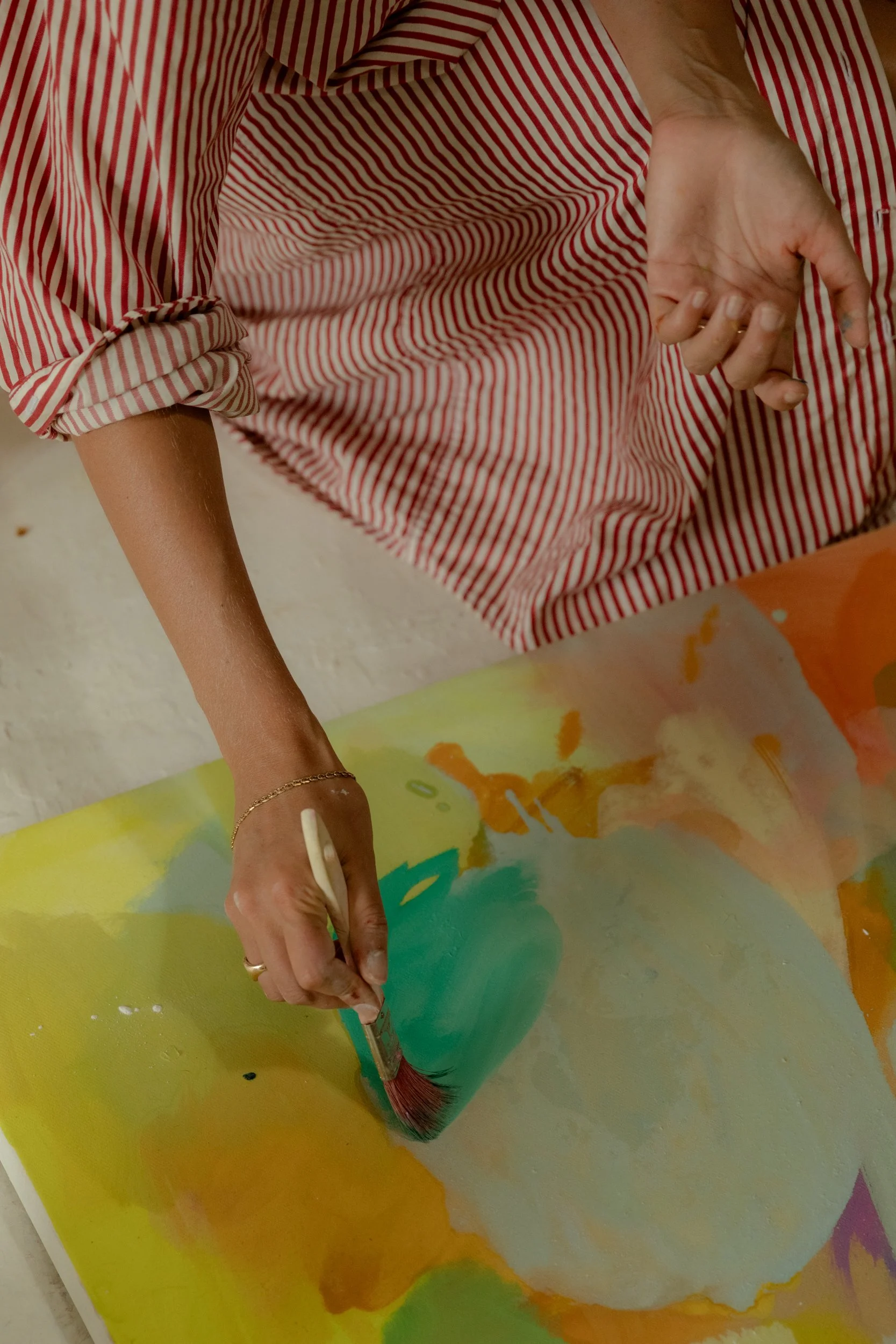
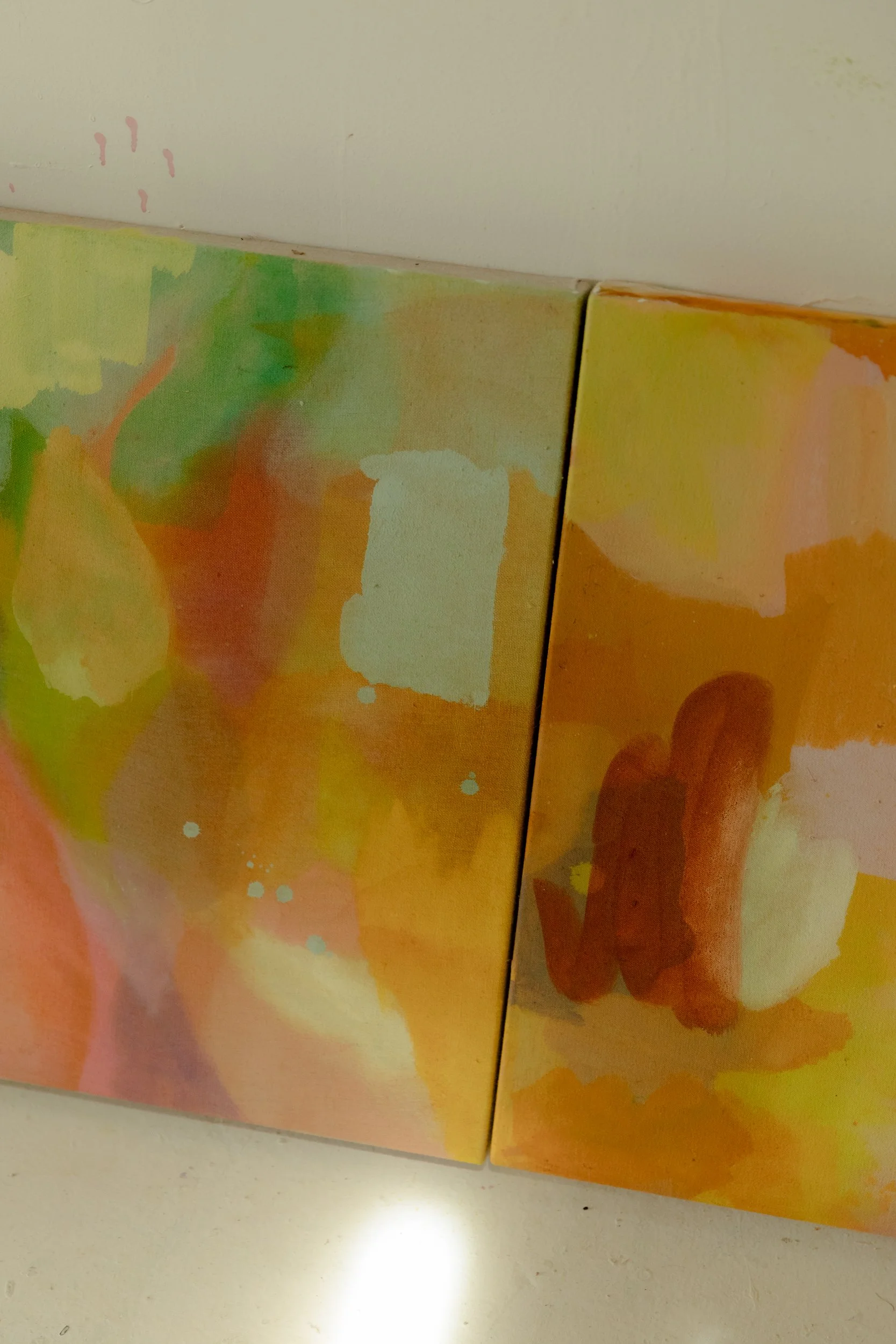
SD. I think that the way I mix colours would probably horrify some of my teachers. It is sometimes technical but also sometimes intuitive and unconventional. I also mix onto the pallet, directly onto the painting, onto the table, a random piece of glass or literally anywhere. I mix colours in transparent layers as well. Letting one colour dry then adding another thin glaze on top.
I think the hardest thing is the conversation between colours. A colour can look great then it can instantly look terrible depending on how it converses with the colours in the rest of the painting.
MM. I imagine being a mother of two means you don’t always get to paint when the inspiration is there. How do you find your flow in the short windows of time you do get?
SD. I actually probably never get to paint when the inspiration is there ha ha. I just have to work when I can even if I don’t feel like it. I find working in small increments is helpful as it becomes like a ritual and the consistency helps me to get into it. I often try to paint for an hour in the morning and an hour in the afternoon.
MM. Who are some of your favourite artists?
SD. Oh gosh so many, here is as completely random list of some of them; Eva Hesse, Ana Mendieta, Cy Twombly, Frida Kahlo, Henri Rousseau, Pierre Bonnard, Egon Schiele, Pipilotti Rist, Louise Bourgeois, Sally Mann, Katharina Grosse, Joseph Beuys, Joan Mitchell, Helen Frankenthaler, Vivian Suter, Luchita Hurtado, Sally Gabori, Francisco Goya, Bridget Riley, Agnes Martin, Cecily Brown, Yoko Ono.
MM. Does music play a role in your creative process? Who are your favourite musicians to listen to?
SD. I do listen to music when I paint sometimes. It depends where I am in the process. When I am doing under layers I can listen to podcasts and audio books. When I get towards the end of the painting it is a lot better to listen to music, often music without words helps me concentrate.
Other wise I love Nick Cave and Leonard Cohen and I listen to them and heaps of random CD’s that my partner collects from op shops. I like having to listen to the whole album and you just put it in and press play and you don’t have to look at your phone.
MM. Did you undertake any formal training and if so, what would you say is the most important aspect you took with you from your studies?
SD. I did interior and spatial design at UTS in Sydney then I started my degree in fine art at Southern Cross in Lismore but did the majority of it at COFA in Sydney. I think a really great thing I learnt at art school was the importance of a dedicated work space. It was the first time I actually had my own studio and I think having a space to create all of a sudden gave a stronger emphasis to the act of painting itself.
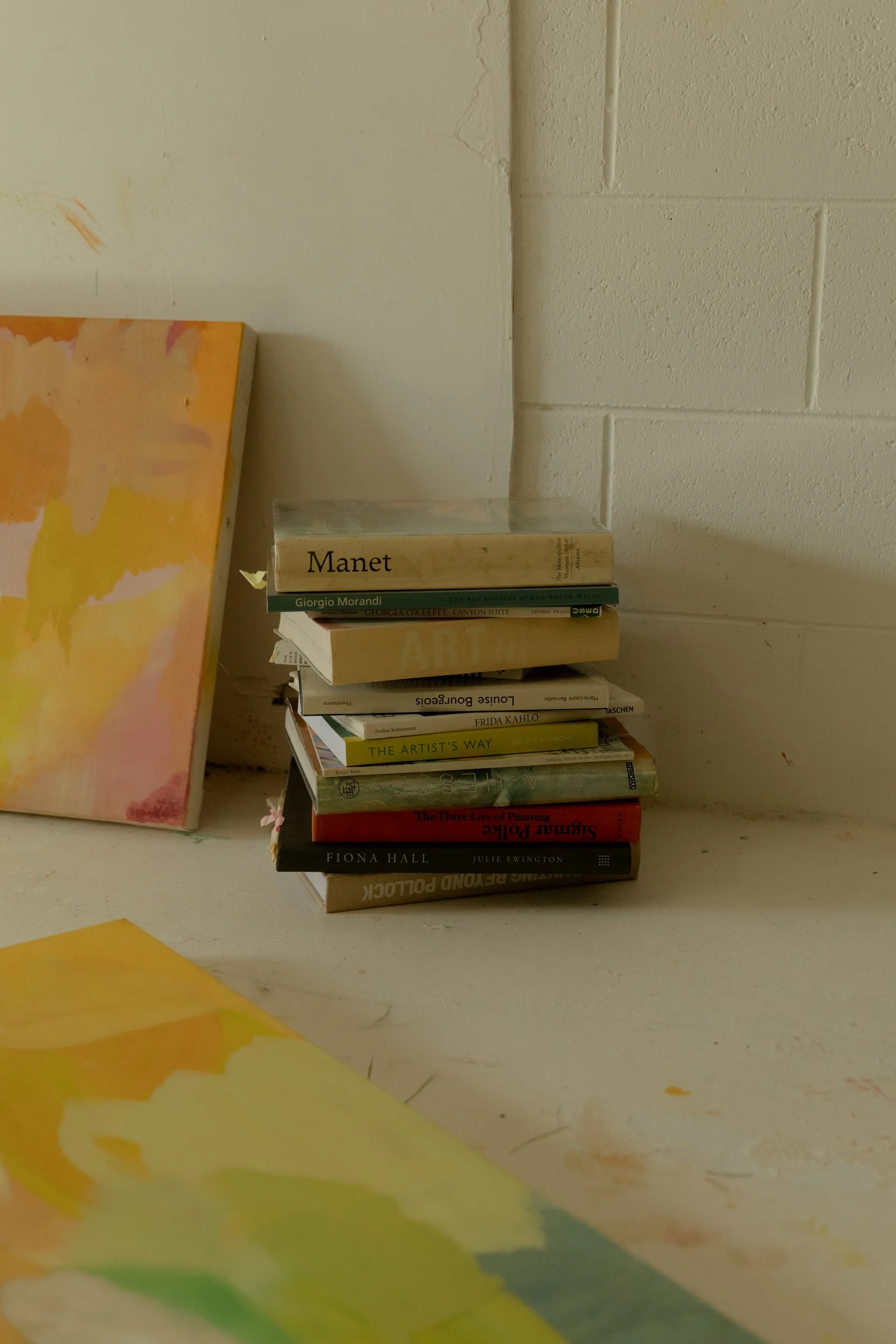
It wasn’t just a hobby anymore it was something I was going to seriously dedicate time to. COFA also has a huge library just of art books, it is honestly worth going there just for the access. I think this manual way of looking for inspiration is something I have taken on into my practice. Having physical books really helps me as looking for inspiration online is often too overwhelming.
MM. Is there anything you feel challenged by as an artist?
SD. So many things. I think these days everyone just sees the finalised paintings. There are honestly more things that don’t work then things that work in my practice. When I have a bad run I feel mentally challenged, ruining a great painting at the last second is the worst.
Over working paintings too is a problem I often have. I’m working on having the confidence to just stop instead of going too far. Also to be totally real for a moment I do feel challenged by the price of artist quality materials. Every time I go to the art store I have a way of finding and wanting series 6 paints without reading the label.
MM. What does an ideal day in the life of Sara Darling look like?
SD. A surf, yoga or a walk. Yum food, reading, painting. Time with my little ones.
MM. What’s next for you as an artist and/or in life?
SD. I think as my two boys get a bit bigger I would love to do some residencies as I haven’t had a chance to do this. I am still chipping away at Agnes Contemporary with my painter friend Skye. So curating shows through Agnes as well in the back ground is something I would love to do more of. In the near future I am working on a solo show for May in Mullumbimby so watch this space!
Words. Rachel Thatcher
Images. Zali Rae